Please Add Preloader

2026

Trump Backs Ramaswamy’s Controversial Attack Ad Against Amy Acton

Trump Backs Ramaswamy’s Controversial Attack Ad
US President Donald Trump has thrown his support behind Republican gubernatorial candidate Vivek Ramaswamy following a fierce political controversy over a campaign advertisement featuring the estranged mother of his Democratic opponent, Amy Acton.

The advertisement has attracted widespread attention in the United States because it brings deeply personal family history and allegations of childhood sexual abuse into an increasingly heated election campaign.

Trump defended Ramaswamy on Thursday, October 22, 2026, arguing that the advertisement was effective and should remain in circulation despite mounting criticism from several prominent Republicans.

The president’s intervention has intensified an already divisive debate about political campaigning, the use of personal trauma in election advertisements, and the limits of negative campaigning.

Ramaswamy, the Republican candidate seeking to become Ohio’s next governor, faces Democratic nominee Amy Acton in a closely watched race. His campaign produced an advertisement featuring Acton’s estranged mother, Donna Arthur, who criticises her daughter and disputes parts of her account of her childhood.

The advertisement has provoked an unusually sharp division within Republican circles. While Trump and Vice President JD Vance have defended Ramaswamy’s approach, other prominent Republicans have described the advertisement as troubling and urged the campaign to reconsider its decision to broadcast it.

The dispute has now become more than a disagreement between two gubernatorial candidates. It has developed into a wider political argument over whether a campaign can legitimately use a candidate’s painful family history to influence voters.

According to reporting by the Associated Press and other US news organisations, Ramaswamy’s campaign intends to spend approximately $4 million promoting the advertisement across Ohio. AP News

What Trump Said About the Advertisement

Trump publicly defended Ramaswamy on his Truth Social platform, dismissing criticism of the advertisement and attacking those who have called for its removal.

The president argued that the advertisement was politically effective and suggested that the media’s reaction was part of a coordinated effort to undermine the Republican candidate.

Trump also criticised Ohio Republican Governor Mike DeWine, who had described the advertisement as deeply troubling and encouraged Ramaswamy to take it down.

Rather than joining those calling for the advertisement to be withdrawn, Trump urged the candidate to keep running it.

His response reflected his longstanding preference for aggressive political messaging and his willingness to defend allies who use confrontational campaign tactics.

Trump has repeatedly portrayed criticism from political opponents and sections of the media as evidence that his political allies are being unfairly targeted.

In this case, however, the controversy involves more than conventional disputes over campaign promises, taxation or government performance. The advertisement draws on a family relationship marked by serious allegations concerning Acton’s childhood.

That background has made the president’s defence particularly contentious.

Supporters of Ramaswamy argue that voters deserve to hear information they consider relevant when choosing a political leader. Critics counter that the advertisement exploits an intensely personal and painful history rather than focusing on the policies and qualifications that should determine an election.

Trump’s intervention has strengthened Ramaswamy’s position among some conservative supporters while increasing pressure on other Republicans to explain whether they believe the advertisement crosses an ethical line.

The dispute also highlights Trump’s continuing influence over Republican politics. His endorsement can provide candidates with valuable visibility and support, but his involvement can also turn a state-level controversy into a national political confrontation.

The central question is no longer simply whether the advertisement attracts attention. It is whether the attention helps voters evaluate the candidates or distracts from the issues they are seeking to resolve.

Source: Associated Press reporting on Trump’s defence of Ramaswamy. AP News

Who Is Vivek Ramaswamy?

Vivek Ramaswamy is an American entrepreneur and Republican politician who gained national prominence during his campaign for the Republican presidential nomination in 2024.

Before entering politics, he built a career in the biotechnology and investment industries. His political profile grew through his outspoken criticism of what he describes as excessive corporate influence, progressive political ideology and established institutions.

During his presidential campaign, Ramaswamy positioned himself as a younger, forceful conservative willing to challenge established political figures and conventional campaign practices.

Although he did not secure the Republican presidential nomination, the campaign helped establish him as a prominent figure in the party.

His political relationship with Trump has also attracted attention. Ramaswamy has frequently expressed support for Trump’s political agenda and has sought to appeal to voters who favour confrontational leadership and a more aggressive approach to conservative politics.

His campaign for Ohio governor has brought those political instincts into a state-level contest with significant implications for both parties.

The current controversy presents a challenge for Ramaswamy because it places his campaign strategy under scrutiny beyond the usual questions about taxation, economic growth, public safety and government efficiency.

His supporters may see the advertisement as an example of a candidate refusing to retreat under pressure. Critics may interpret the same decision as evidence that the campaign is willing to exploit private family pain for political advantage.

Those competing interpretations could shape how voters view his judgement and leadership.

The controversy also creates a difficult communication challenge. The more attention the advertisement receives, the harder it becomes for the campaign to keep public discussion focused exclusively on its preferred issues.

Whether that attention ultimately benefits Ramaswamy will depend on how voters respond and whether the controversy changes their assessment of his suitability for office.

Who Is Amy Acton?

Amy Acton is a physician and Democratic politician who previously served as director of the Ohio Department of Health.

She became widely known during the COVID-19 pandemic, when she served as a leading public health official in Ohio and participated in the state’s response to the public health emergency.

Her experience in public health has helped shape her political profile, with supporters presenting her as a candidate whose professional background and government experience could be valuable in public office.

Acton’s campaign for governor places her in direct competition with Ramaswamy, creating a contest that has attracted attention beyond Ohio.

The controversy surrounding the advertisement has brought her childhood into the centre of the campaign, despite the fact that her professional record and policy proposals would ordinarily be expected to feature prominently in a gubernatorial race.

Acton has publicly disputed the portrayal of her childhood in the advertisement and condemned the decision to use her estranged mother’s statements against her.

She has said that she experienced sexual abuse by her stepfather when she was a child and that her mother failed to protect her.

These are serious allegations involving a painful period in her life. They should be discussed with care and not treated as entertainment or as proof of a candidate’s political character.

Acton’s account has also received support from her brother, Philip Stearns, who has publicly challenged the claims made in the advertisement.

The competing accounts have made the issue particularly sensitive. While the advertisement presents the mother’s criticism of her daughter, Acton and her brother have offered a different account of the family’s history.

For voters, the controversy raises a difficult question: how much weight should be given to accusations made by a relative who has been estranged from a candidate for decades, particularly when the dispute involves allegations of childhood abuse?

That question cannot be answered simply by deciding which message is more emotionally powerful.

Voters can assess candidates’ public records and statements, but claims about private family events require careful consideration of the available evidence and context.

Background reporting: CBS News coverage of the Ohio governor’s race controversy. CBS News

What Does the Attack Advertisement Say?

The advertisement features Donna Arthur, Acton’s estranged mother, criticising her daughter’s account of her upbringing.

In the video, Arthur calls Acton a liar and disputes claims about her childhood, including her account of experiencing homelessness.

Arthur’s appearance gives the advertisement an unusually personal character. Rather than relying only on statements from political opponents or criticism of a candidate’s public record, the campaign uses the voice of someone who is closely related to Acton.

That choice is central to the controversy.

Political advertisements commonly feature former colleagues, political opponents, public records or interviews intended to challenge a candidate’s credibility. Using an estranged family member introduces another dimension because viewers may interpret the speaker as having personal knowledge that an ordinary political opponent would not possess.

However, family relationships can be complicated, and a relative’s accusations do not automatically establish that those accusations are accurate.

The advertisement’s critics argue that its presentation risks encouraging voters to judge Acton through the lens of a painful family dispute rather than examining her policies and qualifications.

They also argue that the advertisement does not provide the full context needed to understand the estrangement between Acton and her mother.

Acton has said she experienced sexual abuse by her stepfather during childhood. Her brother has supported her account and said the family was removed from their mother’s custody after the stepfather faced criminal charges connected to the allegations.

According to published reports, the stepfather was charged in 1978 but fled and later died without standing trial. Therefore, the criminal allegations should not be described as a conviction. People.com

This distinction matters in responsible journalism.

Reporting that someone was charged with a crime is not the same as reporting that a court found the person guilty. Similarly, reporting a candidate’s allegations and the response from family members does not mean a news organisation should present every disputed detail as independently established fact.

A campaign advertisement is also a form of political communication, not an independent judicial finding or a comprehensive account of a family’s history.

Readers should therefore consider the advertisement alongside credible reporting and statements from the people involved.

Why the Advertisement Has Sparked Such Strong Reactions

The strongest criticism of the advertisement centres on the use of Acton’s reported childhood trauma in a political contest.

Opponents argue that allegations of childhood sexual abuse are serious matters that should not be reduced to campaign material designed to damage a candidate’s reputation.

The concern is not simply that the advertisement is negative. Negative advertising has been a feature of American politics for decades.

The concern is that it uses a deeply personal family conflict, including allegations of abuse, to influence voters during an election.

Critics say this approach risks turning a painful personal experience into a political weapon.

The advertisement has also raised questions about whether the involvement of an estranged relative makes a political claim more credible or merely more emotionally compelling.

A family member may possess personal knowledge of a candidate’s past, but that relationship can also involve conflict, estrangement, competing memories and unresolved grievances.

Consequently, a relative’s statement should not automatically be accepted as the final word on a candidate’s childhood.

Another concern is the effect on public debate.

When campaign advertising focuses on personal trauma, attention can move away from issues that directly affect voters, including healthcare, education, employment, taxes, infrastructure and public safety.

Those subjects remain central to the responsibilities of a state governor.

Ohio voters ultimately need to decide which candidate is best prepared to lead the state. Whether an advertisement featuring a family member helps them make that decision is open to debate.

The controversy has also highlighted the difference between what may be politically effective and what may be ethically defensible.

A campaign can attract widespread attention without necessarily persuading undecided voters. It can also energise supporters while alienating others who believe its tactics are excessive.

The advertisement’s ultimate political impact will depend on how voters interpret its message, the broader campaign environment and the candidates’ ability to redirect attention towards their proposals for governing Ohio.

Republicans Are Divided Over the Campaign Strategy

One of the most striking aspects of the controversy is that criticism has emerged from within the Republican Party.

Ohio Governor Mike DeWine, a Republican who has endorsed Ramaswamy, described the advertisement as deeply troubling and encouraged the candidate to remove it.

DeWine’s response is significant because it shows that disagreement over the advertisement is not limited to Democrats or people who oppose Ramaswamy’s political agenda.

Other Republicans have also criticised the advertisement, arguing that the use of Acton’s family history crosses a line.

Former Republican presidential candidate Nikki Haley has criticised Ramaswamy, while Meghan McCain has also condemned the advertisement.

The criticism reflects a broader disagreement over the standards Republican candidates should observe when campaigning against political opponents.

Some conservatives argue that political campaigns are inherently confrontational and that candidates should not be expected to abandon an effective advertisement simply because it generates criticism.

Others believe that aggressive campaigning must still be subject to ethical limits, particularly when the material involves childhood abuse and family trauma.

These disagreements reveal competing ideas about political leadership.

One approach prioritises tactical effectiveness, arguing that candidates must use every legitimate opportunity to distinguish themselves from their opponents.

Another approach emphasises restraint, arguing that a campaign should avoid exploiting vulnerable people or private suffering, even when the resulting advertisement might attract attention.

The debate is especially significant because Ramaswamy is not only running against Acton. His campaign is also being evaluated by voters who may have different expectations about how a governor should behave.

A candidate’s campaign tactics can become part of the public’s assessment of their judgement, temperament and approach to leadership.

The advertisement may therefore have consequences beyond the immediate controversy, regardless of whether the campaign believes it is effective.

Related coverage: The Washington Post on the backlash to Ramaswamy’s advertisement. The Washington Post

JD Vance Defends Ramaswamy

Vice President JD Vance has also defended Ramaswamy amid criticism from fellow Republicans.

Vance argued that Republicans should concentrate on winning the election rather than publicly complaining about the advertisement.

His response reflects a familiar political argument: internal disagreements should not distract a party from its broader electoral objectives.

From this perspective, public criticism of a candidate’s campaign strategy can weaken party unity and provide opponents with additional opportunities to attack.

However, critics of that position argue that party unity should not prevent Republicans from questioning tactics they consider inappropriate.

The disagreement illustrates the tension between maintaining political solidarity and holding candidates accountable for their decisions.

Vance’s intervention also demonstrates how a state gubernatorial race can become entangled with national Republican politics.

With Trump and Vance both defending Ramaswamy, the controversy has become a test of how much support the candidate retains among influential figures in the party.

At the same time, criticism from other Republicans makes it difficult to portray the dispute as a simple contest between Democrats and Republicans.

Instead, the debate reflects a disagreement within the party about how far candidates should go when attacking political opponents.

That disagreement may continue to shape the campaign as Election Day approaches.

Could the Advertisement Backfire?

Although negative advertisements are designed to weaken opponents, they do not always produce the intended result.

In some cases, voters may accept the message and become less supportive of the targeted candidate. In other cases, they may sympathise with the person being criticised, particularly if they believe the campaign has gone too far.

This possibility is central to the debate over Ramaswamy’s advertisement.

The controversy has drawn national media attention, giving the campaign substantial publicity. However, publicity is not the same as electoral support.

Some voters may view the advertisement as evidence that Ramaswamy is willing to challenge his opponent aggressively.

Others may conclude that the campaign is relying on personal attacks instead of presenting a persuasive case about how he would govern Ohio.

Voters who are already strongly committed to a candidate may interpret the advertisement through their existing political beliefs. Those who remain undecided may pay closer attention to the campaign’s tone and the evidence presented.

The advertisement could also shift attention away from Ramaswamy’s policy proposals and towards questions about his judgement.

That risk becomes more significant when criticism comes from people within his own political party.

However, it would be premature to conclude that the advertisement has already damaged his electoral prospects. Establishing its actual effect would require reliable polling, voter research and election results.

The broader lesson is that controversial political advertising can create both opportunities and risks.

A campaign may succeed in attracting attention while losing the trust of some voters. It may energise its strongest supporters while making it harder to persuade people who are less politically committed.

Whether the strategy works for Ramaswamy remains an open question.

The Role of Social Media in the Controversy

Social media has helped bring the advertisement to a much wider audience.

Campaign videos can spread rapidly through online platforms, allowing candidates to communicate directly with voters without relying entirely on traditional television advertising or newspaper coverage.

That speed can benefit campaigns seeking to control their message and generate public attention.

It can also make controversial content difficult to contain.

Once an advertisement begins circulating online, clips may be shared without context, commentators may offer competing interpretations, and users may react before reading detailed reporting about the underlying events.

The result can be an intense public debate in which emotional reactions spread faster than careful explanations.

In Acton’s case, the advertisement has prompted discussion not only about the candidates but also about childhood abuse, family estrangement and the responsibilities of political campaigns.

Those are sensitive subjects that require accurate and considerate reporting.

Social media users should be cautious about treating campaign claims as established facts or sharing allegations without examining the available evidence.

Journalists also have a responsibility to distinguish between verified information, allegations, political statements and commentary.

For news organisations such as TrendPeels, that distinction is essential.

Reporting a controversy does not require endorsing either candidate. It requires explaining what happened, presenting the relevant responses, and making clear where claims remain disputed.

The goal should be to help readers understand the issue rather than simply reproduce the most provocative statements circulating online.

What This Means for the Ohio Governor’s Race

The controversy has added another layer of uncertainty to Ohio’s gubernatorial contest.

Ramaswamy and Acton are competing for an office with substantial influence over state government, including healthcare policy, education, economic development, infrastructure and public administration.

Voters must decide which candidate they believe can best address those responsibilities.

The advertisement may affect how some voters evaluate the candidates, but its long-term significance will depend on whether the controversy changes the broader conversation about the election.

If the campaign remains dominated by personal accusations, both candidates may find it more difficult to keep public attention focused on their plans for governing.

For Acton, the immediate challenge is to respond to the advertisement while maintaining attention on her campaign platform and professional record.

For Ramaswamy, the challenge is to explain why his campaign considers the advertisement appropriate and why voters should support him despite the criticism.

Trump’s endorsement may help Ramaswamy reinforce his support among voters who value the president’s judgement. It may also ensure that the controversy continues receiving national attention.

Nevertheless, no endorsement can determine how every voter will interpret the advertisement.

Ohio voters have different political priorities, personal experiences and expectations of public officials. Some will focus on party affiliation and policy. Others may give greater weight to a candidate’s conduct during the campaign.

The election will ultimately be decided by voters, not by the volume of online reactions or the number of prominent politicians defending either side.

The controversy could become a defining moment in the race, but its final electoral effect remains uncertain.

A Wider Debate About Ethics in Political Campaigning

Beyond the immediate contest, the dispute raises broader questions about political advertising in the United States.

How far should candidates go when attempting to defeat an opponent?

Should a campaign use a relative’s criticism of a candidate if that criticism concerns private family matters? How should voters evaluate statements made by people involved in long-running personal disputes?

And what responsibility do political parties have when a candidate’s tactics generate widespread criticism?

There are no simple answers to every question, particularly in a political system that strongly protects freedom of expression.

Candidates and campaigns generally have considerable freedom to criticise opponents. However, the existence of that freedom does not mean every campaign tactic will be viewed as fair, responsible or politically wise.

Political advertising serves a legitimate democratic purpose when it helps voters compare candidates, scrutinise records and understand competing policy proposals.

It becomes more problematic when emotionally charged personal material overwhelms substantive discussion or encourages voters to accept disputed claims without examining the evidence.

The controversy involving Ramaswamy and Acton illustrates the difficulty of separating political strategy from ethical judgement.

Supporters of the advertisement may argue that the public should hear the mother’s account and make its own decision. Critics may argue that the campaign has used a painful family history to achieve political objectives.

Both positions are part of the public debate, but readers should distinguish the existence of a political argument from the truth of every claim made within it.

The most responsible approach is to examine the available evidence, consider the responses from the people involved and avoid treating an emotionally powerful advertisement as a substitute for independent reporting.

Ultimately, democratic accountability depends on voters having access to information that is accurate, relevant and presented with sufficient context.

Conclusion: Trump’s Support Intensifies the Political Storm

Donald Trump’s decision to defend Vivek Ramaswamy over the controversial advertisement featuring Amy Acton’s estranged mother has intensified an already divisive debate in Ohio.

The president has urged Ramaswamy to continue running the advertisement, while several Republicans have raised concerns about the use of Acton’s family history and allegations of childhood abuse in a political campaign.

The disagreement reveals a significant divide over the boundaries of negative campaigning and the responsibilities candidates have when seeking public office.

For Ramaswamy, the controversy presents both an opportunity to reinforce support among voters who favour aggressive political tactics and a risk of alienating those who consider the advertisement inappropriate.

For Acton, it creates the challenge of responding to a deeply personal attack while continuing to make her case to Ohio voters.

For the Republican Party, the dispute highlights tensions between party unity and the willingness of individual members to criticise a candidate’s campaign strategy.

The advertisement’s ultimate impact on the election remains uncertain. Its reach and the reactions it has generated demonstrate its ability to dominate political discussion, but only further evidence can establish whether it changes voter preferences.

As the race continues, the central question for Ohio voters will remain which candidate is best equipped to lead the state.

That judgement should rest on credible information about the candidates’ records, policies, conduct and qualifications—not solely on the emotional force of a campaign advertisement.

TrendPeels will continue to follow developments in the Ohio governor’s race and the wider debate over political campaigning in the United States.
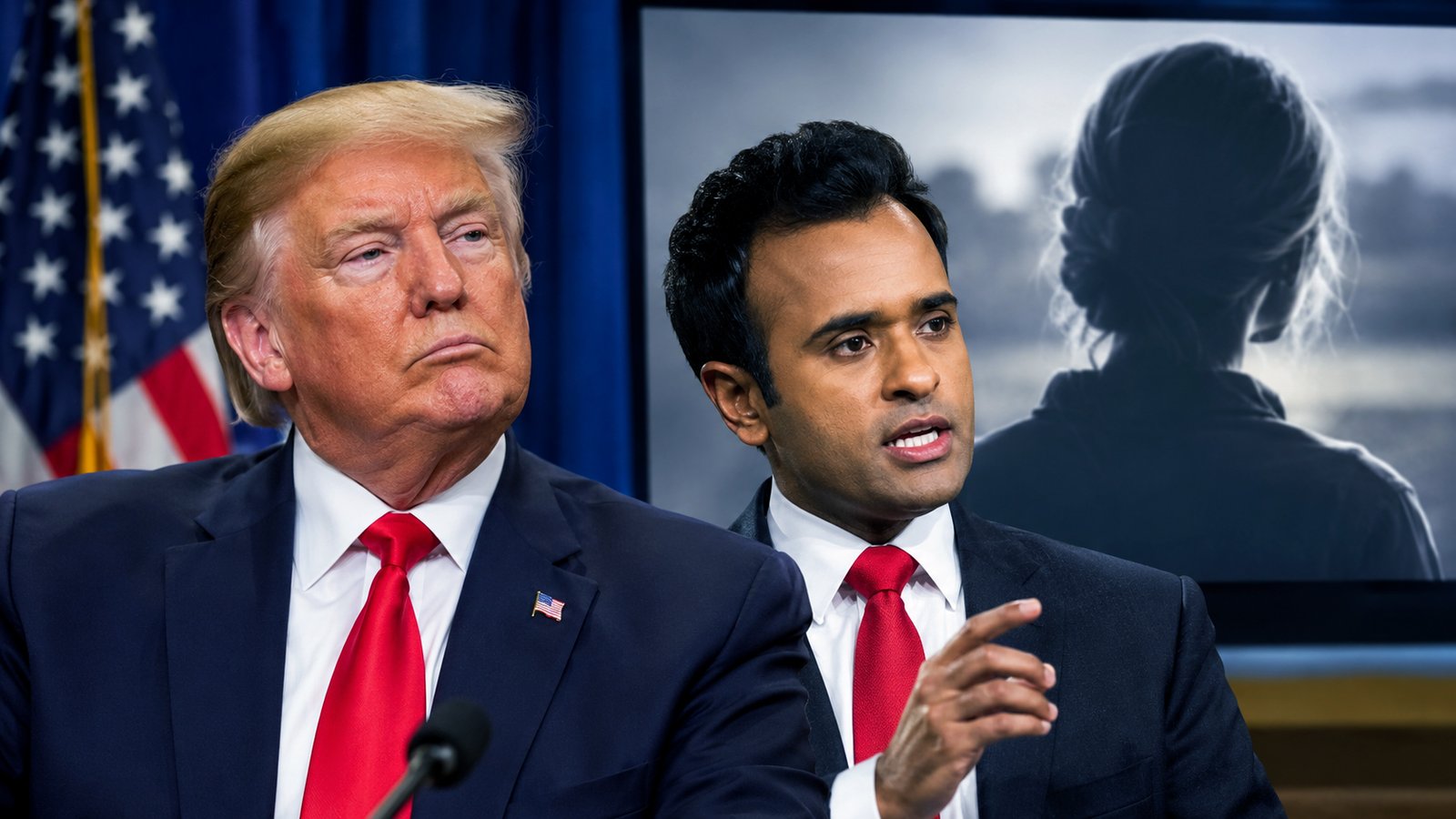

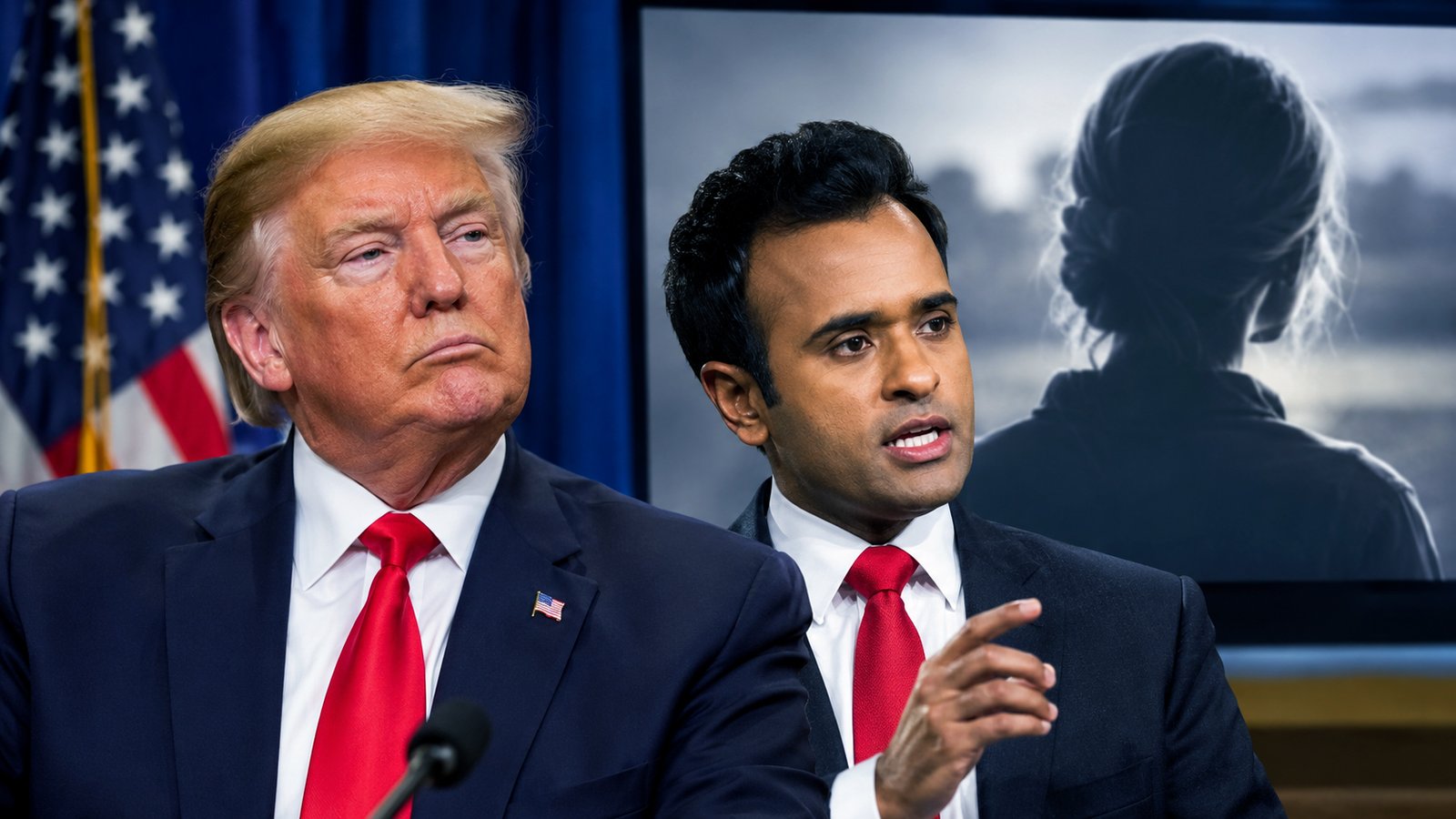
Editorial illustration of Donald Trump and Vivek Ramaswamy amid controversy over a political campaign advertisement.
An editorial illustration representing the political controversy surrounding Donald Trump’s defence of Vivek Ramaswamy’s campaign advertisement.


Publication note: This article is based on reporting available as of October 23, 2026. Before publishing, verify whether any new statements or campaign developments have emerged. Keep allegations clearly attributed and avoid describing criminal charges as convictions.

All set. Here’s a TrendPeels ready, including SEO details, a bio, and an image note to help keep things clear for TrendPeels. Here’s the article, ready for publication on TrendPeels. Headline Trump Backs Ramaswamy’s Attack Ad Against Amy Acton. By TrendPeels News Desk Publication: October 23rd, 2026, in International Politics | US Politics. Reading time about 10 to 12 minutes. Focus keyword: Trump backs Ramaswamy attack ad. Meta description: Donald Trump defends Vivek Ramaswamy over a controversial campaign ad featuring the rival’s mother. By TrendPeels News Desk, in International Politics | US Politics. Suggested image: an editorial illustration, not a real photo. Alt text: Editorial illustration of Donald Trump and Vivek Ramaswamy amid political controversy. Caption: An editorial illustration representing the political controversy surrounding Donald Trump’s defence of a controversial campaign advertisement. For publishing, add licensed editorial illustrations, and keep allegations clearly attributed, not stated as convictions. Before publishing, check for any updates, and keep the allegations clearly attributed, not stated as convictions.

Davido Remembers Late Son Ifeanyi on 7th Birthday | TrendPeels

Davido Remembers Late Son Ifeanyi on What Would Have Been His Seventh Birthday

By TrendPeels News Desk
Publication Date: October 23, 2026
Category: Celebrity News | Nigerian Entertainment
Reading Time: 3 minutes

Nigerian Afrobeats superstar Davido has remembered his late son, Ifeanyi Adeleke, with an emotional birthday tribute that has drawn renewed attention to the singer’s personal loss and the enduring bond between a parent and a child.

The singer shared the heartfelt message on Tuesday, October 20, 2026, marking what would have been Ifeanyi’s seventh birthday. His message expressed the continuing love he and his wife, Chioma Adeleke, have for their son, whose death in 2022 deeply affected the family and touched fans across Nigeria and beyond. Punch Newspapers

Davido Shares Emotional Birthday Message

Davido took to social media to honour his late son, sharing a brief but meaningful message that reflected the family’s continued remembrance of the child.

According to PUNCH, the singer wrote:

“Happy birthday son …. Me and mommy miss and love you! Keep flying high.”

The message was shared on what would have been Ifeanyi’s seventh birthday, four years after the family experienced the devastating loss.

Although the tribute was brief, it conveyed the love and longing that remain significant as Davido and Chioma continue their lives following the tragedy. Punch Newspapers

Who Was Ifeanyi Adeleke?

Ifeanyi Adeleke was the son of Davido, whose real name is David Adeleke, and his wife, Chioma Adeleke.

Born on October 20, 2019, Ifeanyi would have celebrated his seventh birthday on October 20, 2026.

The young boy died on October 31, 2022, at the age of three, following a drowning incident at the family’s residence in Lagos.

His death sent shockwaves through Nigeria’s entertainment industry, prompting an outpouring of condolences from musicians, entertainers, public figures and fans who sympathised with the family during the difficult period. The Lagos State Police Command confirmed drowning as the cause of death following an autopsy. Punch Newspapers

Chioma and Davido Continue to Remember Their Son

For Davido and Chioma, important dates associated with Ifeanyi remain opportunities to honour his memory.

The singer’s latest birthday tribute demonstrates that, despite the passage of time, the loss remains a deeply personal part of the family’s story.

According to Pulse Nigeria, Chioma also revisited a birthday tribute she had shared in 2022, reflecting her own remembrance of their son.

The couple have continued their lives together since the tragedy and welcomed twins in October 2023. However, their growing family does not diminish the significance of remembering the child they lost. Pulse Nigeria

Fans React to Davido’s Tribute

Davido’s message attracted attention from fans and social media users, many of whom expressed sympathy and shared messages of remembrance.

For many followers, the tribute was a reminder that public figures experience personal grief despite their fame, wealth and professional achievements.

Davido has built a successful career in the global music industry, performing internationally and releasing music enjoyed by millions. Nevertheless, his public remembrance of Ifeanyi highlights a personal experience that extends beyond his identity as an entertainer.

The reactions also demonstrate how social media can provide a space for supporters to express compassion and solidarity with public figures during difficult moments.

A Reminder of the Personal Side of Celebrity Life

Celebrity news often focuses on new music, luxury lifestyles, relationships, awards and professional achievements. Stories like Davido’s tribute offer a different perspective by drawing attention to family, remembrance and the emotional experiences that can shape a person’s life.

While fans may know their favourite entertainers through performances and public appearances, those entertainers also have private experiences that deserve sensitivity and respect.

Davido’s message was a personal expression of love for his late son. It is a reminder that grief does not necessarily disappear with time and that important anniversaries can continue to hold deep meaning for families who have experienced loss.

As fans remember Ifeanyi alongside his parents, the story serves as an opportunity to approach conversations about bereavement with empathy rather than speculation.

TrendPeels will continue to bring readers verified Nigerian celebrity news, entertainment updates and stories making headlines across the country.

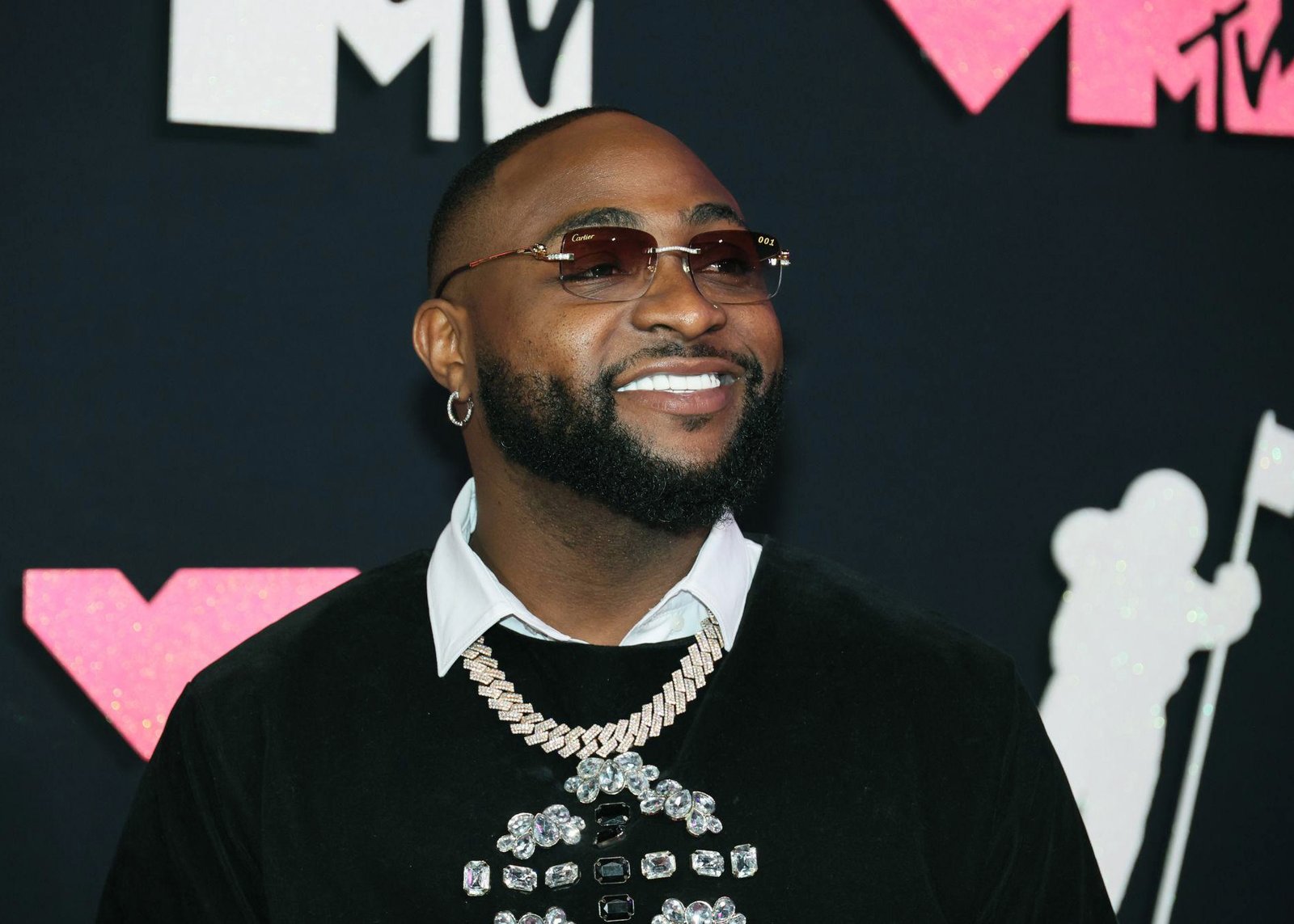
Davido holding his late son, Ifeanyi Adeleke.
Nigerian music star Davido, whose tribute to his late son has drawn attention to his family’s remembrance.

Dangote Accepts Isbae U’s YouTube Show Invitation | TrendPeels

Dangote Accepts Bae U’s Invitation to Appear on ‘Curiosity Made Me Ask’ YouTube Show

The job of entrepreneurs is to manage these four risks

Nigeria’s billionaire industrialist Aliko Dangote has accepted an invitation from popular Nigerian content creator and comedian Isbae U to appear on his YouTube programme, Curiosity Made Me Ask.

The development has attracted attention because it brings together two figures who occupy very different spaces in Nigeria’s public life: one of Africa’s most prominent businessmen and a digital entertainer whose programme uses comedy and unconventional questions to engage online audiences.

The invitation was extended on Monday, October 19, 2026, during an interaction at the Dangote Refinery in Lagos. Isbae U, whose full name is Adebayo Ridwan, suggested that Dangote should consider speaking to younger Nigerians through platforms they regularly watch. The businessman responded positively and indicated that he was willing to visit the programme to share his experiences.

The exchange has generated interest because it could provide an opportunity for young Nigerians to hear directly from a businessman whose career spans manufacturing, cement, sugar, fertiliser and petroleum refining.

It also raises a broader question about how influential business leaders communicate with a younger generation that increasingly receives news, business advice and entertainment through YouTube, TikTok, Instagram and other digital platforms.

Although Dangote accepted the invitation, a specific date for his appearance had not been announced in the reports published on October 20, 2026. The acceptance should therefore not be confused with confirmation that the episode has already been recorded or scheduled for release.

For Isbae U, the proposed interview could become a significant addition to his programme. For viewers, it may offer a rare opportunity to hear an industrialist discuss his experiences in a setting designed to encourage direct, sometimes unexpected questions.

How Isbae U Invited Dangote to the Show

Instagram comedian Isbae U finally breaks silence over s*x for role allegation | Pulse Nigeria

The invitation took place during a visit to the Dangote Refinery in Lagos, where Isbae U interacted with Dangote and raised the issue of reaching younger audiences.

According to reports by TheCable Lifestyle, Punch and Premium Times, the comedian argued that many of Dangote’s previous interviews appeared on platforms that younger viewers might not ordinarily watch. He suggested that his YouTube programme could provide a different setting for the businessman to speak directly to that audience.

During the exchange, Isbae U explained that young Nigerians were interested in Dangote’s businesses and wanted to understand more about his entrepreneurial journey and future investment opportunities.

He also made it clear that he was not suggesting that Dangote should dismiss his existing media team. Rather, he was encouraging the businessman to broaden his media engagement to include the platforms where younger people spend time.

The approach was informal and direct, reflecting the style that has helped digital creators build audiences outside traditional television and radio.

Instead of relying on a formal invitation delivered through conventional media channels, Isbae U used a face-to-face interaction to make his request.

Dangote listened to the proposal and acknowledged the importance of young people as an audience for business leaders.

His response indicated that he was willing to participate in a conversation where younger Nigerians could ask questions about his career, the decisions behind his businesses and the experiences that shaped his success.

The moment has since become a talking point because it illustrates how creators can use digital media to seek access to people who have traditionally appeared in business interviews, televised discussions and formal corporate events.

Dangote says young people deserve a place in the conversation

Dangote says those with more money should try their luck with Nigerian refineries | Business Insider Africa

One of the most notable parts of the exchange was Dangote’s response to the argument that younger Nigerians needed more opportunities to hear from him.

The businessman acknowledged that the younger generation represented the future of Nigeria and Africa. He also reflected critically on the contributions of his own generation, saying older Nigerians needed to share their experiences with younger people.

His remarks shifted the conversation beyond the invitation itself. Instead of treating the proposed appearance as simply another entertainment booking, Dangote presented it as an opportunity for different generations to learn from one another.

This could be particularly significant for young Nigerians interested in entrepreneurship. Many aspiring business owners encounter stories of successful entrepreneurs through short videos, motivational posts and interviews, but often have limited access to detailed accounts of how major businesses were actually built.

A conversation with Dangote could offer a chance to discuss the decisions, challenges and lessons behind decades of business activity.

For instance, aspiring entrepreneurs may want to understand how a business identifies a market opportunity, raises capital, manages employees, deals with competition and survives difficult economic conditions. They may also be interested in how long it takes to build a large company and how business owners respond when their plans do not work as expected.

Dangote’s willingness to engage with a younger audience suggests that he sees value in sharing his experience through contemporary media formats. Whether the eventual conversation provides detailed answers to these questions will depend on the interview itself.

What is ‘Curiosity Made Me Ask’?

CURIOSITY MADE ME ASK | Podcast on Spotify

Curiosity Made Me Ask is the YouTube programme associated with Isbae U, whose comedy and interview style often centres on unusual, direct or humorous questions.

The format has helped the content creator turn conversations with guests into digital entertainment. Instead of relying entirely on a formal question-and-answer structure, the programme uses humour and curiosity to create moments that viewers can discuss and share.

That approach is different from the typical business interview, where questions often follow a structured agenda covering company performance, industry developments and investment decisions.

The appeal of Curiosity Made Me Ask is that guests may encounter questions in a more relaxed, unconventional setting. The format can create moments that feel more spontaneous than a traditional corporate interview.

For Dangote, appearing on such a programme would offer a chance to communicate with viewers who may not regularly follow business television or financial news.

However, the proposed interview should not automatically be treated as a comedy appearance with no business substance. Dangote’s comments during the invitation suggest that he is interested in discussing his experiences and responding to questions about his achievements.

The programme could therefore bring together humour and serious topics, depending on how the host and guest approach the conversation.

That combination is one reason the proposed episode has attracted attention. Viewers may be curious to see whether Isbae U’s familiar style can produce an engaging discussion with a businessman whose public appearances are often associated with industry, investment and corporate development.

Why Isbae U wants Dangote to speak to young Nigerians

The argument behind the invitation was straightforward: young people are interested in business opportunities, but many of the platforms used by business leaders to communicate may not be where younger audiences spend most of their media time.

Isbae U raised the issue while discussing Dangote’s business interests and the potential for young Nigerians to invest in his company. Reports said the creator mentioned a planned initial public offering as one reason younger viewers might want to hear more directly from the businessman.

The distinction between interest in a business and the ability to invest in it is important. A discussion on a YouTube programme could introduce viewers to a company, its history and its ambitions, but it would not by itself establish the terms or availability of any investment opportunity.

Anyone considering investing in a company would need to rely on official disclosures, relevant regulatory filings and verified information about the offering. A celebrity interview, no matter how popular, is not a substitute for independent financial research.

Nevertheless, Isbae U’s point reflects a broader change in how companies and entrepreneurs reach their audiences.

Traditional media remain important, but digital creators have built communities that consume information in short videos, livestreams, podcasts and online interviews. For businesses seeking to communicate with younger consumers, founders and potential investors, these channels can provide a different kind of access.

A prominent guest on a popular digital programme can also help introduce business concepts to people who might not normally watch a corporate interview.

If handled carefully, the format could make topics such as industrial investment, entrepreneurship and business leadership more approachable to a general audience.

What viewers may want Dangote to explain

If the episode goes ahead, there are several subjects that could make the conversation valuable beyond the headline announcement.

How did he begin? Viewers may want to hear how Dangote entered business, identified opportunities and developed the companies that eventually formed part of his wider business group.

What does it take to build an industrial company? Nigeria’s manufacturing sector faces challenges that include financing, infrastructure costs, logistics and access to reliable energy. An interview could give Dangote an opportunity to discuss the decisions involved in establishing and operating large-scale industrial facilities.

What mistakes shaped his career? Success stories are often presented as a sequence of achievements. Aspiring entrepreneurs may learn more from an honest discussion of setbacks, bad decisions, failed plans and the steps taken to recover from them.

How can young people prepare for entrepreneurship? Viewers may be interested in the skills, work habits and financial discipline that can help a person develop a sustainable business.

What should young investors understand? Given Isbae U’s reference to investment interest, viewers may expect questions about ownership, company growth and the risks associated with investing. Any claims about specific investment opportunities, however, should be grounded in official documents.

These are possible discussion points, not confirmed questions for the episode. Neither the final interview agenda nor the release schedule had been announced in the reports reviewed.

Still, they illustrate how a conversation that begins with an entertainment headline could lead to subjects relevant to viewers interested in business, employment and economic development.

Dangote’s business journey makes the proposed interview significant

非洲首富砸230億美元蓋煉油廠 能靠黑金本多終勝? | 鉅亨網 - 國際政經

Aliko Dangote is widely known for building a major Nigerian industrial group with operations spanning cement, sugar, salt, fertiliser and petroleum refining.

His business journey is relevant to younger Nigerians because it offers an example of the scale of investment required to establish industrial operations in a country where infrastructure, financing and logistics can be difficult challenges.

The Dangote Refinery in the Lekki area of Lagos has become one of the most prominent projects associated with his group. The facility represents an effort to expand domestic petroleum refining and reduce Nigeria’s dependence on imported refined fuel. Its impact on the economy, pricing and the country’s energy sector remains a subject of public and industry discussion.

A conversation with the businessman could give viewers more insight into why he pursued large-scale industrial projects, how he approached long-term investment and what he believes Nigeria needs to develop a stronger manufacturing base.

For young entrepreneurs, such a discussion might also help distinguish between the experience required to run a small business and the capital, organisation and time horizons involved in major industrial ventures.

It would be inaccurate, however, to suggest that one interview could provide a complete account of Dangote’s business success or settle debates about the impact of his companies. Those subjects require evidence, independent analysis and a range of perspectives.

The potential value of the appearance lies in giving viewers direct access to his explanation of his own experiences, followed by the opportunity to assess those comments critically.

A meeting point between entertainment and business

The invitation also illustrates how entertainment platforms can become spaces for conversations about subjects that affect everyday life.

For many people, the first point of contact with business information may not be a financial newspaper or a corporate website. It may be a creator they follow for comedy, music, lifestyle content or commentary.

When a business leader appears on such a platform, the audience can extend beyond people who already take an interest in economics or corporate affairs.

That creates an opportunity, but also a responsibility for both the interviewer and the guest.

The host must balance an entertaining format with questions that provide meaningful information. The guest, in turn, has an opportunity to explain complex ideas in language that a broader audience can understand.

For example, subjects such as industrial investment, employment, business ownership and economic development can be discussed without assuming that viewers have a background in finance.

Isbae U’s invitation suggests that he wants to use his platform to make that type of conversation accessible to younger people. Dangote’s acceptance indicates that he is willing to consider the opportunity.

The actual quality of the interview will ultimately depend on the questions asked, the answers given and whether the discussion offers viewers something beyond the novelty of seeing a billionaire on a comedy-focused programme.

What Dangote’s acceptance means for Isbae U

For Isbae U, receiving a positive response from a leading Nigerian industrialist is an important moment for his programme.

Creators often build their influence by developing a distinctive format and attracting guests who can bring new viewers to their channels. An appearance by Dangote could introduce the programme to business audiences and viewers who might not otherwise watch it.

It could also demonstrate that a digital creator’s audience is relevant to people beyond the entertainment industry.

However, the invitation is not a guarantee of a particular audience size, commercial outcome or future booking. The impact will depend on whether the episode is recorded, how it is presented and whether viewers find the discussion engaging.

The announcement itself offers a useful lesson for content creators: an online platform can potentially reach people who have traditionally been interviewed mainly by established broadcasters and news organisations.

That does not mean creators must abandon entertainment to discuss serious subjects. Rather, it shows that a recognisable format can provide a route into conversations that cross industries.

If the proposed interview takes place, it could give Isbae U an opportunity to expand his programme while maintaining the style that his audience already knows.

Has Dangote’s appearance been scheduled?

As of October 22, 2026, the reports reviewed confirm that Dangote accepted Isbae U’s invitation, but they do not announce a specific recording date or release date for the episode.

It is therefore too early to announce that viewers can watch the interview on a particular day.

The next important update would be a statement from Isbae U, Dangote or the programme’s official channel confirming the recording or publication schedule.

Until then, the story remains an accepted invitation rather than a confirmed premiere.

Viewers interested in the episode should follow the show’s official YouTube channel and the participants’ verified social media accounts for announcements.

Final thoughts

Dangote’s acceptance of Isbae U’s invitation is more than a meeting between a comedian and a billionaire. It reflects the growing relevance of digital media in conversations about business, entrepreneurship and Nigeria’s future.

Isbae U made the case that younger Nigerians deserve access to business leaders through the platforms they use. Dangote responded by recognising the importance of engaging younger generations and sharing experiences across age groups.

If the interview goes ahead, it could give viewers an opportunity to hear from Dangote about his career, the lessons he has learned and the challenges involved in building large businesses.

For Isbae U, it could be an opportunity to demonstrate that a digital entertainment platform can host a conversation with broader educational and economic value.

For the audience, the most meaningful outcome would not simply be a famous guest appearing on a popular show. It would be a discussion that answers real questions, explains business concepts clearly and gives young people useful information to consider.

For now, the invitation has been accepted, and audiences will be watching for the next announcement.

TrendPeels will update this report when a confirmed recording or release date is announced.


Ebola in Abuja: 44 Contacts Traced After Confirmed Case | TrendPeels

Nigeria’s Federal Government has confirmed an imported case of Bundibugyo Ebola virus disease in the Federal Capital Territory (FCT), Abuja, triggering an intensified public health response aimed at preventing further transmission.

The Federal Ministry of Health and Social Welfare announced on Tuesday, October 20, 2026, that laboratory testing had confirmed the infection in a woman with a recent travel history involving Uganda. The patient had received treatment at a private health facility in Abuja before the diagnosis was established. She was subsequently placed in isolation and was receiving medical care, according to the ministry.

Nigerian health officials coordinating the public health response following a confirmed Bundibugyo Ebola case in Abuja.
Nigerian health authorities coordinate surveillance and infection prevention measures following the confirmed Bundibugyo Ebola case in Abuja.

As part of the response, authorities reported identifying 44 people who may have been exposed to the patient. Public health teams began monitoring these contacts while investigating the circumstances surrounding the case and working to determine whether anyone else might have been exposed.

The confirmation has brought renewed attention to Nigeria’s disease-surveillance systems, hospital preparedness, border health checks and the importance of promptly recognising symptoms that could be associated with Ebola.

Although the disease is serious, health authorities have urged the public to remain calm, follow official advice and avoid spreading unverified information. The immediate priority is to identify possible exposures, monitor people who may be at risk and prevent further infections.

For Nigerians, the announcement raises practical questions: What exactly is Bundibugyo Ebola virus disease? Does identifying 44 contacts mean the virus has spread widely in Abuja? How is the infection transmitted, and what should people do if they develop possible symptoms?

Understanding the facts is essential to responding responsibly.

What is confirmed so far: Nigeria has reported one laboratory-confirmed imported case, the patient is receiving care in isolation, and 44 contacts had been identified for monitoring in official reports dated October 20–21. The number of contacts should not be confused with the number of confirmed infections.

What Happened in Abuja?

When Caregivers Become Patients: Frontline Vulnerability in the Bundibugyo Outbreak Response | Infection Control Today

According to the World Health Organization (WHO), the patient is a woman whose symptoms began on October 7, four days after her arrival in Nigeria. She sought care at a private health facility in Abuja on October 11, and laboratory testing confirmed Bundibugyo virus infection on October 20. She remained in isolation while receiving medical care, according to the agency’s October 20 reports

The government described the case as imported, meaning the infection was associated with exposure outside Nigeria rather than a confirmed chain of transmission originating within the country.

However, the patient’s complete travel and exposure history was still being investigated. Her travel history involving Uganda does not, by itself, establish where she acquired the infection. The WHO said investigations were ongoing to establish the likely source and reconstruct her movements and possible exposures.

The distinction is important because international travel can involve several destinations, stopovers and opportunities for exposure. Determining where an infection originated requires a detailed investigation rather than assumptions based solely on a traveller’s itinerary.

Health authorities have been working with the Nigeria Centre for Disease Control and Prevention (NCDC), the FCT health authorities, the WHO and other partners to coordinate surveillance, clinical care, testing and contact tracing.

These measures are intended to establish whether anyone else has been infected and to limit the chance of the virus spreading further.

Why Are Authorities Tracking 44 Contacts?

Contact tracing is one of the most important tools public health officials use to control infectious disease outbreaks.

After confirming an infection, investigators work to identify people who had contact with the patient during a period when exposure might have occurred. Depending on the circumstances, this may involve healthcare workers, other patients, caregivers, household members and people who travelled with the infected individual.

Nigeria’s Federal Ministry of Health reported that 44 close contacts had been identified after the Abuja case was confirmed. The government said surveillance had been intensified and that the private hospital where the patient received care was receiving support to strengthen infection prevention and control.

Identifying contacts does not mean that all 44 people are infected. It means authorities have identified people whose possible exposure needs to be assessed and followed up.

Public health teams can use contact tracing to determine who may need monitoring, testing or other measures based on the nature and timing of their exposure. They can also identify further people who might have had relevant contact with the patient.

The process generally involves speaking with the patient where possible, reviewing travel and healthcare records, identifying people who may have been exposed and maintaining contact with those individuals during the monitoring period.

Anyone directed by health authorities to undergo monitoring or quarantine should follow those instructions. The minister’s public comments, reported by Voice of Nigeria on October 21, said identified contacts would be monitored and that people instructed to quarantine must comply with public health guidance.

The key point for the public is that 44 contacts represent the scope of the tracing effort reported at that time, not 44 additional Ebola cases.

What Is Bundibugyo Ebola Virus Disease?

Bundibugyo virus disease is a severe illness caused by Bundibugyo virus, one of the viruses in the Ebola virus group.

The disease was first identified during an outbreak in Uganda’s Bundibugyo District in 2007–2008. It is distinct from the Ebola virus species responsible for the major 2014–2016 West African outbreak, although both can cause severe illness.

WHO identifies Bundibugyo virus as one of three Ebola virus species known to have caused large outbreaks. It also notes that approved vaccines and specific treatments are available for only one of the Ebola diseases; there is no approved vaccine or treatment for Bundibugyo virus disease at the time of its general guidance. Supportive medical care, including rehydration and treatment of complications, can improve the chances of survival

This distinction matters because the word “Ebola” is often used broadly in public discussion, even though different viruses within the group can require different medical countermeasures.

The current case in Abuja is associated with the Bundibugyo strain. It is therefore important for readers to follow updates specifically about this strain instead of assuming that vaccines or treatments developed for another Ebola virus automatically apply.

Public health officials and clinicians will determine appropriate care using established medical protocols, laboratory findings and specialist guidance.

The confirmation of one case is serious and requires a coordinated response. It does not, by itself, establish that a widespread outbreak is occurring in Abuja.

How Does Ebola Spread?

Understanding how the disease spreads can help people take appropriate precautions without becoming unnecessarily frightened.

According to WHO, Ebola viruses can enter the human population through contact with infected animals and can spread between people through direct contact with the blood or other body fluids of someone who is sick with the disease or has died from it. Transmission can also occur through objects and surfaces contaminated with infectious body fluids.

This is why healthcare workers caring for suspected or confirmed patients need proper protective equipment, infection-control procedures and appropriate training.

It is also why hospitals must manage potentially infectious materials carefully and ensure that staff know how to protect themselves and others.

Ebola should not be treated as if it spreads through every ordinary social interaction. WHO states that people cannot transmit the disease before they develop symptoms. Transmission risk is associated with exposure to an infected person’s blood or body fluids and contaminated materials, rather than simply being in the same city or country

Nevertheless, people who may have been exposed should not attempt to assess their risk solely by reading descriptions online. They should follow instructions from qualified health professionals and public health authorities.

Symptoms Nigerians Should Know

Doctor checking temperature of covid patient while testing for high fever symptoms of sick, flu or illness. Screening woman for a healthcare consult, checkup and visit in a hospital or medical clinic

Recognising symptoms early is important because Ebola can initially resemble other illnesses common in Nigeria.

WHO says the incubation period—the time between infection and the appearance of symptoms—ranges from two to 21 days. Symptoms may begin suddenly with fever, fatigue, muscle pain, headache and sore throat. Other symptoms can include vomiting, diarrhoea, abdominal pain and rash, with possible impairment of kidney and liver function. Bleeding may occur in some patients, but WHO notes that it is less frequent than many people assume.

The Nigerian health minister also urged vigilance for symptoms such as fever, headache, nausea, vomiting, body aches and severe muscle pains

These symptoms are not unique to Ebola. Malaria, typhoid and other infections can produce similar early signs. That makes a person’s clinical assessment and exposure history important, particularly for someone who has recently travelled to an area affected by an Ebola outbreak or had contact with a suspected or confirmed case. WHO specifically notes that Ebola can be difficult to distinguish from other infectious diseases based on symptoms alone.

Nigerians should not assume that every fever is Ebola. Equally, people who may have been exposed should not dismiss concerning symptoms or delay seeking professional guidance.

Anyone who believes they may have had a relevant exposure and develops compatible symptoms should contact public health authorities or a healthcare professional promptly, explain the exposure and follow instructions on how to obtain assessment safely. They should avoid unnecessary close contact with others while awaiting guidance.

Early reporting helps health workers make informed decisions and can reduce the risk of exposing other people if an infection is suspected.

What Should the Public Do Now?

Health authorities have encouraged Nigerians to remain vigilant, observe basic hygiene and cooperate with official disease-control efforts.

The following steps are consistent with established Ebola prevention guidance:

Follow verified public health updates. Use announcements from the Federal Ministry of Health and Social Welfare, the NCDC, the FCT health authorities and WHO. Viral posts without a credible source should not be treated as confirmed information.

Practise good hand hygiene. Wash hands regularly with soap and water, particularly after using the toilet, before eating and after contact with potentially contaminated materials. Follow local public health instructions about additional precautions.

Avoid contact with blood and other body fluids from a person who is sick or has died. Do not handle potentially contaminated materials without appropriate training and protection.

Seek medical advice when relevant symptoms or exposure occur. Give healthcare professionals accurate information about recent travel and any known contact with a suspected or confirmed case.

Cooperate with contact tracers. People approached by authorised public health teams should answer questions accurately and follow any instructions about monitoring, testing or quarantine.

Do not spread unverified accusations or disclose private patient details. Sharing an unconfirmed name, photograph or location can cause harm and interfere with a public health response.

These steps reflect the preventive measures highlighted by Nigerian authorities and WHO, including contact tracing, infection prevention and control, surveillance and community engagement.

Is Abuja Facing a Widespread Ebola Outbreak?

The available official reports confirm one imported case as of October 20 and describe efforts to trace and monitor contacts. They do not establish widespread community transmission in Abuja.

Nigeria’s health minister described the case as imported rather than evidence of community transmission in comments reported by Premium Times on October 20. The situation nevertheless required careful monitoring because investigators were still reconstructing the patient’s movements and exposure history.

A single imported case can demand a substantial public health response because officials need to establish whether the infection has spread to anyone else. The purpose of tracing contacts is precisely to answer that question as early as possible.

It would be premature to declare the matter fully contained before authorities provide further evidence. It would also be inaccurate to describe all identified contacts as infected or claim that Abuja is experiencing widespread transmission without supporting data.

The most responsible interpretation is that Nigeria has confirmed an imported case and is taking measures to prevent additional infections. The public should pay attention to official updates about further confirmed cases, the monitoring of contacts and any changes in the risk assessment.

Nigeria’s Preparedness and the Lessons of 2014

Nigeria has dealt with Ebola before. During the 2014 West African outbreak, a traveller introduced the infection into Lagos, prompting an emergency response involving healthcare workers, public health investigators and contact-tracing teams.

Nigeria eventually contained that outbreak through the identification and monitoring of exposed individuals, isolation of patients, infection prevention and public cooperation. The experience remains an important reference point for the country’s current response.

The government has said Nigeria’s earlier experience, trained personnel and strengthened disease-surveillance arrangements are valuable resources in the present situation. Health authorities have also activated the NCDC’s incident management system to coordinate the response.

However, experience does not eliminate the need for continued vigilance. Each outbreak can present different operational challenges, depending on the virus involved, the speed of diagnosis, the number of people exposed and the availability of clinical resources.

One important lesson is the need for hospitals to consider relevant travel and exposure histories when assessing patients with severe or unexplained symptoms. WHO notes that early Ebola symptoms can resemble other diseases, which can make laboratory testing and careful clinical investigation especially important.

Protecting healthcare workers is equally important. Staff who recognise the possibility of infection early can follow the correct procedures, seek specialist support and reduce the likelihood of further exposure inside healthcare facilities.

Africa CDC Calls Emergency Meeting

The case in Nigeria comes amid a wider Bundibugyo Ebola outbreak that began in the Democratic Republic of the Congo in May 2026.

On October 21, the Associated Press reported that the Africa Centres for Disease Control and Prevention had invited African health ministers to an extraordinary virtual meeting scheduled for October 28. Africa CDC Director-General Jean Kaseya said the meeting was intended to strengthen the collective response to the spreading outbreak.

The meeting reflects concern about the outbreak’s international reach and the importance of coordination between governments.

An outbreak that involves travel across borders requires countries to exchange information, maintain surveillance, prepare healthcare facilities and communicate clearly with the public. No single country can manage a regional public health threat effectively without cooperation from its neighbours and international partners.

For Nigeria, coordination with WHO, Africa CDC and national and state health authorities can help support laboratory capacity, protective equipment, trained response teams and the exchange of technical information. WHO says these measures are important to detect cases rapidly, protect healthcare workers and prevent onward transmission.

The October 28 meeting will take place in the wider context of these regional concerns. Its significance for Nigeria will depend on the measures agreed upon and the way participating countries implement them.

Avoiding Panic and Misinformation

The announcement of an Ebola case can generate anxiety, especially because the disease is associated with severe illness and previous deadly outbreaks.

But public fear is not a substitute for reliable information. False claims about how the disease spreads, unverified reports of additional cases or the circulation of private medical details can undermine trust and complicate efforts to control transmission.

For example, the identification of 44 contacts should not be reported as 44 new cases. Likewise, a person who has travelled through a country associated with an outbreak should not automatically be described as having contracted the virus there.

The patient’s exact exposure history remains a matter for public health investigators, and the number of people confirmed to have Ebola must be distinguished from the number of individuals being monitored.

News organisations and social media users have an important responsibility in this situation. Headlines should reflect confirmed facts, images should not falsely suggest that an unrelated patient has Ebola, and speculative claims should be labelled clearly or excluded.

Members of the public should check the date and source of alarming messages before forwarding them. Old photographs and videos from previous outbreaks may be recirculated as if they show events in Abuja, even when they have no connection to the current case.

People who need information or suspect a possible exposure should use recognised public health channels rather than rely on unverified social media advice.

WHO has also advised against restrictions on travel to or trade with affected countries solely because of this event, while continuing to monitor the evolving situation.

What Happens Next?

In the immediate term, health authorities will need to continue monitoring identified contacts, reconstruct the patient’s movements and exposure history, reinforce infection prevention measures and share verified updates as investigations progress.

The public will need clear information about whether new cases emerge, whether contacts develop symptoms, and what the government determines about the source and extent of the infection.

It will also be important for healthcare facilities to remain alert to possible symptoms, especially when patients have a relevant exposure or travel history.

For now, the confirmed information remains limited: one imported case was reported in Abuja on October 20, and 44 contacts had been identified in official reporting the following day. The patient’s isolation and the tracing effort are key parts of the response, but continued monitoring is necessary before wider conclusions can be drawn.

Nigeria’s ability to prevent further transmission will depend on rapid investigation, safe clinical care, cooperation with contact tracing and accurate public communication.

The right response is neither panic nor complacency. Nigerians should remain informed, follow guidance from recognised health authorities and seek appropriate medical advice when needed.

TrendPeels will update this report as further verified information becomes available from the Federal Ministry of Health and Social Welfare, NCDC, WHO and Africa CDC.

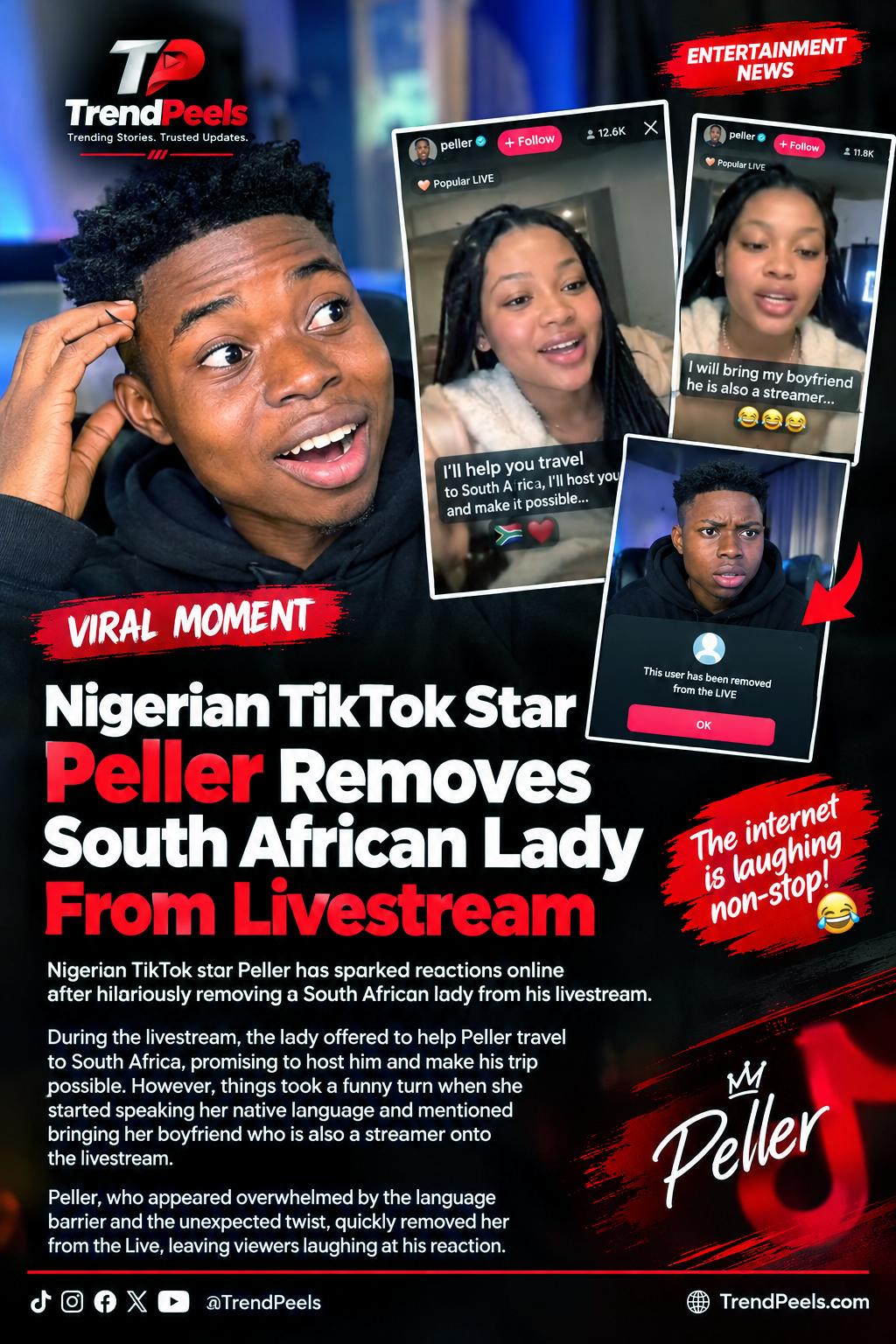
Peller Removes South African Woman From Livestream | TrendPeels

Nigerian internet personality Peller is once again a subject of online conversation after a reported interaction involving South African women who offered to help him visit South Africa. The streamer was reportedly hesitant about the suggestion, prompting interest in how he might react to the invitation.

Peller, whose real name is Habeeb Hamzat, has built a following through livestreams, energetic reactions, comedy and spontaneous conversations with fans. His expressive personality has helped turn ordinary online interactions into entertainment moments that quickly attract attention.

The reported exchange has an obvious social-media appeal: women offering to help a popular Nigerian creator visit their country, followed by his apparent fear or reluctance. But beyond the humour, the situation raises familiar questions about travelling abroad, meeting people first encountered online, and how internet personalities respond when their fans offer real-world assistance.

Editorial note: I could not independently verify the original video or confirm the full context of the reported invitation. This article treats the exchange as a reported social-media interaction, not as a fully established account of what happened. TrendPeels should embed or review the original clip before publishing specific quotations or attributing statements to Peller or the women involved.

Who is Peller, the streamer attracting attention?

Peller is one of the Nigerian online entertainers whose popularity has grown through livestreaming and short-form video content. His real name is Habeeb Hamzat, and his style combines comedy, spontaneous reactions and conversations with viewers.

Rather than relying exclusively on carefully scripted videos, Peller often allows his personality to drive his content. His expressions, jokes, unexpected responses and interactions with other internet personalities are part of what makes his broadcasts appealing to his audience.

That approach can turn even a short conversation into a talking point. A surprising question from a fan, a disagreement during a livestream or an unexpected invitation can become a clip that circulates beyond the original audience.

Peller has also attracted attention for international travel and opportunities connected to his online career. In August 2024, Legit.ng reported on his visit to a South African safari, where footage of him walking near lions generated reactions from viewers.

More recently, YNaija reported on October 17, 2026, that Peller had announced an invitation to visit TikTok’s United Kingdom office. According to the report, he said he intended to raise issues affecting African users, including banned accounts. The outlet noted that TikTok had not publicly confirmed the invitation at the time of the related reporting.

These episodes illustrate why conversations about Peller’s movements, travel opportunities and interactions with people outside Nigeria can attract considerable interest.

The reported invitation from South African women

The reported interaction involving South African women offering to help Peller visit their country has a simple premise, but one that could easily become entertaining online.

For viewers familiar with Peller’s energetic livestream personality, an invitation to travel followed by an apparently nervous reaction offers a contrast that is easy to turn into a meme. Some viewers may interpret the reaction as comedy, while others may wonder whether he is genuinely uncomfortable with the idea.

However, the available information does not establish exactly what the women offered to pay for, whether they were proposing to host him, or whether the conversation was a serious travel arrangement rather than playful livestream banter.

Those details matter. An offer to help someone visit a country could mean anything from recommending tourist destinations to arranging accommodation or paying certain travel costs. Without the original video, it would be misleading to suggest that the women promised to cover all of Peller’s expenses.

What can be explored is the wider appeal of such an exchange: online audiences often enjoy watching creators navigate unexpected situations, particularly when humour, travel and cross-cultural interaction meet.

Why might Peller be scared?

The suggestion that Peller is afraid of travelling to South Africa has become the central hook of the reported story. Yet his exact reason for hesitating has not been independently established.

There are several possible explanations for a reaction like this, and none should be presented as his actual motive without evidence.

First, the conversation may have been part of his usual entertainment style. Streamers frequently exaggerate surprise, confusion or fear to make a moment funny and keep viewers engaged. A facial expression or humorous response does not necessarily reveal how a person genuinely feels.

Second, travelling to another country involves practical considerations. A visitor may need to arrange flights, accommodation, travel documents, transport and a schedule. An invitation from people met online does not automatically resolve those questions.

Third, travelling to meet people whom someone knows primarily through social media can create uncertainty. Even when an invitation appears friendly, a traveller may reasonably want to know who is organising the trip, where they will stay and what arrangements have been made.

Finally, Peller may simply have been joking with the women or reacting to something in the conversation that is not apparent from a short clip.

Until the complete video or a direct explanation becomes available, it is more accurate to describe his reaction as apparent hesitation than to claim that he has confirmed being afraid of South Africa.

South Africa and Nigeria: why the interaction could attract attention

Paste Africa de Sud, Continentala, Johannesburg | DerTour

South Africa is a major destination for international tourism, entertainment, business and cultural exchange. Its cities, music scene, restaurants, shopping districts and landmarks attract visitors from across Africa and beyond.

For Nigerian content creators, a visit can also provide opportunities to produce fresh material for their audiences. Travel videos, street interviews, food reviews, collaborations with local creators and encounters with fans can all become content.

A visit by Peller could therefore interest viewers for reasons beyond the reported invitation itself. Fans might want to see how he interacts with South African creators, what places he visits, how he responds to local culture and whether his characteristic livestream style translates to a different environment.

There is also an established history of cultural exchange between Nigerian and South African entertainment communities. Musicians, actors, influencers and other public figures regularly attract audiences across national borders. Social media makes it possible for people in both countries to interact directly, even when they have never met in person.

At the same time, it is important not to turn a light-hearted exchange into a general statement about the safety of an entire country. An individual’s hesitation about travelling is not evidence that South Africa is dangerous, just as an invitation from a few people is not proof that every arrangement will be safe.

The relevant question is whether a proposed visit is genuine, properly organized and comfortable for everyone involved.

Could the invitation lead to a content collaboration?

If the invitation is genuine and Peller decides to accept it, the encounter could provide an opportunity for collaboration between Nigerian and South African creators.

A visit could include a joint livestream, a conversation about entertainment in both countries, a tour of local attractions or a series of videos featuring cultural differences and shared interests.

Such content can appeal to audiences because it combines personality with discovery. Viewers get to see a familiar creator in a new setting while learning about the people and places around him.

For the women involved, an appearance with a well-known internet personality could also bring attention to their own social media accounts or projects. But that would depend on their interests and the terms of any collaboration; there is no verified information establishing that they have a commercial arrangement with Peller.

A successful collaboration would require clear communication. The participants would need to agree on the purpose of the visit, who is paying for what, whether any content is sponsored and what permissions are needed before filming or publishing material.

The distinction between a friendly invitation and a professional arrangement is especially important when an online interaction begins attracting public attention.

Fans may see comedy, while others may take the reaction seriously

One reason viral moments generate different interpretations is that viewers bring different expectations to the same video.

Fans who enjoy Peller’s humor may see his apparent fear as another funny moment. They might make jokes, create reaction videos or encourage him to accept the invitation.

Other viewers may be more interested in whether he will actually travel. They could ask whether the women are serious, whether the trip will be documented and whether Peller will eventually explain his response.

Some viewers may also focus on the practical side of the situation, questioning whether it is wise to accept assistance from people known only through the internet.

None of these reactions necessarily establishes what Peller intended. Online comments are evidence of audience interest, not proof of a public figure’s private feelings or plans.

Until the original footage can be reviewed, TrendPeels should avoid inventing fan quotations, claiming that the invitation has been accepted or describing the women as confirmed sponsors.

Travel safety should remain part of the conversation

A trip arranged through social media can be exciting, but it should be handled with the same care as any other international journey.

Anyone considering an invitation from online acquaintances should verify the identities of the people involved, confirm accommodation independently and keep control of their travel documents and return arrangements.

It is also wise to make sure the purpose of the trip is clear. If filming or commercial collaboration is expected, the participants should discuss the schedule, expenses, content ownership and any payment before travelling.

These precautions are not a judgement about the people making an invitation or the country being visited. They are sensible steps for anyone travelling internationally, particularly when plans originate from an online conversation.

For a public figure such as Peller, there may be additional considerations involving security, crowd management, filming permissions and the expectations of fans who know his movements through livestreams.

A responsible travel plan can protect both the visitor and the people offering assistance.

What happens next?

For now, the most important unanswered question is whether the reported interaction will lead to an actual trip.

If Peller responds publicly, shares more of the conversation or announces travel plans, those details could clarify what the women offered and why he appeared hesitant.

Until then, the story remains a reported online exchange rather than a confirmed international travel arrangement.

The incident nevertheless reflects the increasingly blurred line between online entertainment and real-world interaction. For creators who build audiences through livestreams, conversations with strangers can quickly become public events, complete with speculation about what will happen next.

Peller’s appeal has often rested on his spontaneous reactions and his willingness to turn everyday conversations into entertainment. Whether the South African invitation becomes a genuine collaboration or simply another funny moment for viewers will depend on what the people involved actually decide to do

Nigerian TikTok star Peller during a livestream discussing a reported invitation from a South African woman to visit South Africa
Nigerian streamer Peller during a public appearance.

Burna Boy’s ₦250m School Project: VDM Faces Accountability Questions | TrendPeels

Burna Boy’s ₦250m School Project: Nigerians Demand Accountability From VDM Over ₦50m Murals

TrendPeels News Desk | October 21, 2026 | Entertainment · Trending News

The conversation surrounding Grammy-winning Nigerian singer Burna Boy and social media activist VeryDarkMan (VDM) has taken a new turn following public questions about a school and clinic project reportedly funded with ₦250 million in Rivers State.

The controversy centres on the reported ₦50 million spent on murals and graffiti at the project site in Odiokwu, Ahoada West Local Government Area. After VDM shared images of the artwork and described the expenditure as money well spent, social media commentator Daniel Regha and other online critics questioned the cost, the design and the need for prominent portraits of Burna Boy and VDM around a school.

The discussion has developed into a broader debate about transparency, responsible spending and whether public figures who take responsibility for community projects should provide detailed explanations when people raise questions.

Important distinction: Available reports establish that critics are demanding explanations about the project. They do not establish that Burna Boy himself has publicly accused VDM of wrongdoing or personally demanded an accounting. The questions raised online are not proof of financial misconduct.

2027 Elections: Opposition Unity Faces Fresh Test | TrendPeels

By TrendPeels News Desk · October 21, 2026

Article

Nigeria’s political landscape is becoming increasingly active as preparations for the 2027 general elections gather momentum. One major question is now attracting attention: can opposition parties agree on a common presidential candidate, or will disagreements over leadership and party interests prevent them from presenting a united front?

Recent reports indicate that discussions about an opposition alliance are continuing, but differences among key political figures remain a major challenge.

Opposition coalition talks face a difficult test

Efforts to coordinate opposition parties have centred on the possibility of presenting a consensus candidate to challenge President Bola Ahmed Tinubu and the ruling All Progressives Congress (APC).

According to a report by Vanguard published on October 21, the G-100 opposition coalition has established legal and media committees as part of its efforts to advance discussions involving several political parties.

The report identified the African Democratic Congress (ADC), Nigeria Democratic Congress (NDC), Peoples Democratic Party (PDP), Social Democratic Party (SDP), Peoples Redemption Party (PRP) and Allied Peoples Movement (APM) among the parties participating in the discussions.

However, bringing political parties together is not simply a matter of agreeing that they want to challenge the ruling party. Leaders must also negotiate over candidates, party structures, political influence and the direction of a possible coalition.

These questions have made the search for a common platform increasingly complicated.

Kwankwaso rejects calls to withdraw his party’s ticket

A key point of disagreement involves Rabiu Musa Kwankwaso and the Nigeria Democratic Congress.

BusinessDay reported on October 21 that Kwankwaso had rejected the suggestion that the NDC’s presidential ticket should be withdrawn in favour of the ADC. The disagreement followed exchanges between political camps over the proposed opposition arrangement.

The dispute highlights a challenge that has confronted opposition alliances in Nigeria: political leaders may agree on the need for cooperation but disagree on who should lead it.

For supporters of individual candidates, the question of who receives a presidential ticket is often central to their expectations. Party leaders, meanwhile, must consider whether giving up a ticket could weaken their organisations or diminish their influence in future political negotiations.

As a result, negotiations over a single candidate can become as difficult as building the alliance itself.

What roles could Atiku Abubakar and Peter Obi play?

Former Vice President Atiku Abubakar and former Anambra State governor Peter Obi remain prominent figures in discussions about opposition coordination.

Their supporters represent different political constituencies and have distinct expectations about leadership, governance and the direction of the country.

Atiku’s political experience and established networks are part of the arguments made by his supporters. Obi’s supporters point to his appeal among voters seeking changes in the way Nigeria is governed. Kwankwaso also brings his own political organisation and support base into the discussion.

The challenge is finding an arrangement that can accommodate these interests without allowing disagreements to derail negotiations.

Vanguard’s report indicates that the G-100 coalition is continuing engagements involving several presidential hopefuls, including Atiku Abubakar, Peter Obi, Donald Duke and Adewale Adebayo.

Why opposition unity matters to Nigerian voters

For voters, the political negotiations are important because they can shape the choices available at the ballot box.

A coordinated opposition could make it easier for voters with similar priorities to rally around a common candidate. However, a coalition’s effectiveness would depend on more than the number of parties involved.

Voters may also consider the candidates’ policy proposals, records in public office, approaches to security, plans for economic recovery and strategies for addressing the cost of living.

Political alliances can also face difficulties after elections if participating parties have conflicting priorities or fail to agree on how power and responsibilities should be shared.

This means that voters have reasons to examine both the formation of a coalition and the policies its leaders intend to pursue.

Economic hardship and security remain important issues

The emerging political contest is taking place against the backdrop of concerns about living costs, employment, public services and insecurity.

President Tinubu’s administration has defended its economic reforms, including the removal of the petrol subsidy, while critics have raised concerns about the financial pressure experienced by households.

Reuters reported on October 21 that Finance Minister Taiwo Oyedele defended the government’s economic direction and its plan to rely more on private capital to support future growth. The report also noted that the reforms had contributed to higher living costs.

For opposition parties, these issues provide an opportunity to explain how their proposed policies would differ from those of the current administration.

But voters will need more than broad promises. They will want to know how proposed measures would be funded, how quickly they could be implemented and what protections would be available for vulnerable households.

The same scrutiny applies to the ruling party’s record and future commitments.

What happens next?

The coming months will be important for Nigeria’s political parties as they work through candidate selection, alliances and campaign preparations.

The immediate questions include whether opposition leaders can agree on a common candidate, whether individual parties will retain their separate tickets and whether coalition discussions will produce a shared policy programme.

For now, the reported disagreements show that opposition coordination remains an active and unresolved political issue

Atiku Abubakar, Peter Obi and Rabiu Kwankwaso amid opposition coalition discussions ahead of Nigeria's 2027 elections.
Opposition leaders face ongoing discussions over a possible common candidate for Nigeria’s 2027 elections.

Ultimately, the significance of these negotiations will depend on what they deliver for voters. Nigerians will be watching not only to see which politicians work together, but also to assess the plans each political camp offers for addressing the country’s most pressing challenges.

TrendPeels will continue to follow developments in Nigeria’s political landscape as more verified information becomes available.

Best Hotels in Maiduguri: 8 Places to Stay | TrendPeels

Best Hotels in Maiduguri: Top Places to Stay for Comfort, Business and Relaxation

By TrendPeels

Maiduguri, the capital of Borno State, is a city with a strong identity, a rich cultural heritage and a reputation for welcoming visitors from different parts of Nigeria. Known for its connection to the Kanuri people and its importance in northeastern Nigeria, the city attracts government officials, businesspeople, researchers, humanitarian workers, families and travellers with different reasons for visiting.

Whether you are travelling to Maiduguri for work, attending an event, visiting relatives or planning a short stay, one decision can make a significant difference to your experience: choosing the right hotel.

A good hotel is more than a room with a bed. It should offer a comfortable place to rest, reliable services, helpful staff, suitable facilities and a location that makes getting around easier. Depending on your budget, you may prefer a luxury hotel, a serviced suite or a simpler accommodation option that offers good value for money.

Fortunately, Maiduguri has several hotels and accommodation facilities worth considering. Among the names visitors can research are Polo Grand Hotel, Amada International Hotel, Solace Suites and Homes, Nanne and Boi Suites, Grand Pinnacle Luxury Hotel and Borno State Hotel.

But which one is best for you?

The answer depends on your priorities, your budget, the purpose of your trip and the facilities available when you book. Here is a closer look at some options to consider before making your reservation.

1. Polo Grand Hotel — A strong option for travellers seeking comfort

Polo Grand Hotel, Maiduguri: Hotel Reviews, Rooms & Prices | Hoteles.com

hoteles.com

Photo reference: Polo Grand Hotel, Maiduguri. Confirm the image matches the property before publication.

If you are looking for a hotel to put on your shortlist, Polo Grand Hotel is one of the first properties worth investigating.

Located around the Polo field area of Maiduguri, the hotel has received encouraging ratings in an online hotel directory. A listing updated in September 2026 placed it at the top of its Maiduguri ranking, reporting a Google rating of 4.5 out of 5 from 38 reviews. These figures are a useful starting point, although they do not guarantee that every guest will have the same experience.

Ranked

For travellers, the appeal of a hotel often comes down to the little things: a room that feels clean, staff who respond promptly, a comfortable bed and internet access that works when it is needed. Recent online listings mention positive comments about room cleanliness, food, service and Wi-Fi at Polo Grand Hotel.

Ranked

That makes it worth considering for business travellers, people attending meetings and visitors who want to compare a more upscale accommodation option.

Before booking, ask about room categories, breakfast, restaurant services, internet reliability, power arrangements and any extra charges. It is also sensible to request recent photographs of the exact room you intend to reserve.

Best for: Travellers prioritising comfort, business visits and a hotel with encouraging recent online ratings.

Location: Polo field area, Maiduguri, Borno State.

Contact: +234 808 948 6283. Confirm the number and availability before travelling.

2. Amada International Hotel — A hotel worth comparing

AMADA INTERNATIONAL HOTEL - Updated 2026  Reviews (Maiduguri, Nigeria)

tripadvisor.com

Photo reference: Search for current property photographs before using this image as an official hotel photo.

Amada International Hotel is another name to consider when searching for accommodation in Maiduguri.

The property is listed on Shehu Sanda Kyari Crescent, and its online business listing reports a rating of 4.1 out of 5 based on more than 600 reviews. That larger review count offers visitors more feedback to examine than a listing with only a handful of reviews, although the quality and recency of individual reviews still matter.

One useful way to evaluate a hotel is to look beyond its name or appearance. Ask yourself whether the location suits your plans, whether the rooms meet your expectations and whether the overall cost fits your budget.

For someone travelling for a meeting, an accessible location and dependable internet may matter more than decorative features. For a family, room size, privacy, food options and the ability to arrange transport may be more important.

Amada International Hotel deserves consideration as part of a comparison, but prospective guests should verify its current facilities and room conditions directly with the hotel.

Ask for a full quotation before paying. Confirm the check-in and check-out times, cancellation policy and whether the advertised price includes taxes, meals or other services.

Best for: Visitors who want to compare a centrally located accommodation option and review a substantial amount of online guest feedback.

Location: Shehu Sanda Kyari Crescent, Maiduguri, Borno State.

Contact: +234 812 229 8227. Verify contact details and booking terms before making payment.

3. Solace Suites and Homes — An option for a more residential stay

Solace Suites and Homes Maiduguri | Hotel in Maiduguri, Nigeria

housity.net

Photo reference: Solace Suites and Homes, Maiduguri. Verify property identity before publishing.

Not every traveller wants the traditional hotel experience. Some prefer accommodation that feels more private or residential, particularly when staying for several days.

Solace Suites and Homes is worth checking if that describes your needs.

The property is listed at 37 Losho Road, off Lagos Street, Maiduguri. Its online business listing reports a rating of 4.3 out of 5 from 74 reviews. That is a promising signal, but the relatively smaller review sample means visitors should read recent feedback and confirm the specific facilities they need.

For longer stays, the practical questions are straightforward. Is there enough space to work comfortably? Are meals available, or is there access to cooking facilities? Is the room serviced regularly? Is the internet suitable for remote work? What arrangements are available for laundry and transport?

Do not assume that every suite or apartment includes a kitchen, living room or other residential features simply because of the name. Room layouts can vary, so request photographs and a written description of the exact unit being offered.

If you are visiting Maiduguri for a project, a family engagement or an extended business assignment, this is the kind of property that may be worth comparing with conventional hotels.

Best for: Visitors considering suite-style or residential accommodation, especially for stays where privacy and room layout matter.

Location: 37 Losho Road, off Lagos Street, Maiduguri.

Contact: +234 809 999 5225. Confirm current services, room types and prices directly.

4. Nanne and Boi Suites — An established name to explore

NANNE And BOI Suites  | Hotel in Maiduguri | Hotels.ng

hotels.ng

Photo reference: Nanne and Boi Suites, Maiduguri. Check that any selected photograph shows the correct property.

Nanne and Boi Suites is another accommodation option for visitors who want to compare location, pricing and guest feedback before deciding where to stay.

The property is listed on Onitsha Road in Maiduguri, with an online business rating of 4.0 out of 5 based on more than 800 reviews.

A substantial collection of reviews can help travellers identify recurring comments about cleanliness, staff behaviour, room comfort and value. However, a high number of reviews does not automatically mean that every room is in the same condition or that all services are consistently available.

Before booking, focus on the details that will affect your own stay. If you are travelling for business, ask whether the room has a suitable workspace and reliable internet. If you are visiting with relatives, ask about room capacity, extra bedding and any policies for children.

It is also important to confirm the total amount payable. Online information can be outdated, and the cost of a suite may differ depending on the room category, season and length of stay.

Nanne and Boi Suites belongs on a comparison list for travellers who want to weigh established accommodation options against their personal requirements.

Best for: Travellers who want to compare suite accommodation and draw on a substantial pool of online guest reviews.

Location: Onitsha Road, Maiduguri, Borno State.

Contact: +234 907 700 0904. Confirm the current booking contact before making arrangements.

5. Borno State Hotel — A property with a connection to the city

Zulum commissions remodelled State Hotel, Maiduguri - Abc News Nigeria

abcnews.com.ng

Photo reference: Borno State Hotel. Use a current image from the property’s official website where possible.

For visitors who want to explore a hotel associated with Maiduguri’s history, Borno State Hotel is an interesting option to investigate.

The hotel’s official website describes the property as having been built in the early 1960s and subsequently revitalised. It also advertises extensive grounds and more than 79 rooms across several categories, including standard, double, VIP and executive accommodation.

State Hotel Maiduguri

These details make the property relevant to travellers looking beyond a basic overnight room. Different room categories can suit different needs, from a straightforward individual stay to accommodation for guests who prefer more space.

The hotel also promotes facilities for events, including a multipurpose hall. This could make it worth considering for organisations planning meetings, conferences, celebrations or other gatherings in Maiduguri.

However, advertised features should always be confirmed before booking. A hotel may list a facility on its website without every service being available at all times. Ask whether the rooms have recently been renovated, which amenities are currently operational and whether event spaces are available on your preferred dates.

For people organising a conference or group visit, request a detailed quotation covering accommodation, meals, meeting spaces, equipment and any additional service fees.

Best for: Visitors interested in a long-established local hotel, as well as organisations exploring accommodation and event facilities.

Website: Borno State Hotel

Tip: Request current room photographs and a written quotation before making a reservation.

6. Grand Pinnacle Luxury Hotel — For travellers comparing room categories

Accommodation & Travel - ARIN AGM 2026

arinagmkanem2026.org

Photo reference: Grand Pinnacle Luxury Hotel, Maiduguri. Confirm the image with the property before publication.

Grand Pinnacle Luxury Hotel is another property visitors may wish to compare, particularly if they are looking for different room categories or planning a group visit.

The hotel appears in accommodation listings for Maiduguri, and a 2026 conference accommodation page includes it among the properties offering several room types. The page lists chalet, suite and deluxe or executive options, with rates that vary by category.

NANCONF 2026

The availability of multiple room categories can be useful because not every guest needs the same thing. A solo traveller might prefer a standard room, while a family or business team could require a larger space.

Still, the word luxury in a hotel’s name should not be the only reason to book. A more expensive room is worthwhile only if its facilities, cleanliness, service and overall comfort justify the price.

Look for recent reviews, ask for current photographs and confirm whether advertised amenities are operating. If you are booking several rooms, request the group rate in writing and ask whether the hotel can accommodate everyone in the same area.

Best for: Travellers comparing different room categories, as well as groups looking for accommodation options.

Contact: +234 803 892 1433. Verify the number, room availability and current rates before making payment.

7. Dujima International Hotel — An option to investigate for business trips

Dujima International Hotels | About Us

dujimainternationalhotels.com

Photo reference: Dujima International Hotel. Confirm the exact branch and photograph before publication.

Dujima International Hotel is another familiar name in Maiduguri’s accommodation listings. However, travellers should take care when researching it because listings refer to properties or branches in different areas, including Shehu Laminu Way and Wulari.

A conference accommodation listing provides information about room categories and indicative rates for Dujima properties, but prices and room availability can change.

NANCONF 2026

For a business traveller, the best hotel is often the one that makes the trip easier. That means considering the distance to your meeting venue, the availability of transport, the quality of the room and whether the hotel can provide a quiet place to work.

If your visit involves appointments at the University of Maiduguri, government offices or other institutions, compare the route from the hotel to your destination rather than selecting accommodation on price alone.

When contacting Dujima, specify the exact branch you want. Ask for the full address, room category, total cost and available amenities. This small step can help prevent confusion, particularly when different online listings use similar names.

Best for: Visitors who want to compare established accommodation options and choose a location suited to their itinerary.

Tip: Confirm the exact branch and obtain the current room rate directly from the property.

8. Bajele Apartment and Resort — A newer option to check out

agoda.com

Photo reference: Bajele Apartment and Resort, Maiduguri. Verify the property and image before use.

Travellers who prefer to explore a wider range of accommodation should also look at Bajele Apartment and Resort.

Its online business listing places it opposite Crack on Airport Road in Maiduguri and reports a rating of 4.7 out of 5 from 16 reviews.

That rating is encouraging, but the small number of reviews makes it particularly important to check the details yourself. A few positive ratings can provide an initial indication, but they do not offer the same depth of feedback as a property with hundreds of reviews.

Ask about room availability, access arrangements, parking, power supply, internet access and whether the accommodation is suitable for your length of stay. If you are arriving by air, confirm the actual journey time from the airport and whether the property can help arrange transport.

Bajele may be worth adding to your shortlist if you want to compare alternatives beyond the most widely mentioned hotels.

Best for: Travellers exploring apartment-style accommodation and alternative places to stay.

Tip: Check recent reviews and request current pictures before paying a deposit.

Quick comparison: Which Maiduguri hotel should you choose?

Hotel Why consider it? What to check
Polo Grand Hotel Encouraging online ratings Current facilities and room prices
Amada International Hotel Substantial online review history Room condition and included services
Solace Suites and Homes Suite-style accommodation Layout and long-stay facilities
Nanne and Boi Suites Established accommodation listing Room category and current rate
Borno State Hotel Long-established property and advertised event facilities Renovations and available amenities
Grand Pinnacle Luxury Hotel Several advertised room categories Maintenance and current pricing
Dujima International Hotel Multiple listings and accommodation options Exact branch and location
Bajele Apartment and Resort Alternative apartment-style option Recent guest feedback and facilities

This is a practical shortlist, not a definitive ranking of every hotel in Maiduguri. The properties have not all been independently inspected, and online ratings are subject to change.

What should you look for when booking a hotel in Maiduguri?

Choosing accommodation involves more than comparing prices. Before paying, consider the following factors.

1. Cleanliness and room condition

Request recent pictures of the actual room, bathroom and sleeping area. Check reviews for recurring complaints about maintenance, housekeeping or damaged facilities. A beautiful lobby cannot compensate for an uncomfortable room.

2. Electricity and internet

Reliable electricity and internet can be essential for anyone working remotely, attending online meetings or managing a business. Ask about backup power and test the Wi-Fi if you can.

3. Security and access

Confirm the hotel’s access arrangements, visitor policies and transport options. Check current travel advice from relevant authorities and ask trusted local contacts about conditions around your destination. Security conditions can change, so do not rely on old reviews alone.

4. Food and other services

Find out whether breakfast is included, whether the restaurant is operating and what meal options are available. If you have particular dietary requirements, confirm them before arrival.

5. Location

A hotel near your meeting, event or family destination may save you time and transport expenses. However, check the actual route and current conditions rather than assuming that a short distance will always mean a quick journey.

6. Transparent pricing

Ask for the full price per night, including taxes and additional charges. Confirm the cancellation policy, deposit requirements and payment method. Use verified contact details and obtain a booking confirmation before travelling.

Is Maiduguri worth visiting?

Maiduguri offers visitors an opportunity to experience the culture, food and everyday life of northeastern Nigeria. The city has long served as an important centre for commerce, education, government and regional activity.

Visitors may have different reasons for coming: attending an event, conducting business, visiting the University of Maiduguri, seeing friends and family, or learning more about Borno State.

Whatever brings you to the city, planning ahead matters. Check current travel advisories, confirm transport arrangements and make sure your accommodation is prepared for your arrival. Conditions can differ between locations and change quickly, so consult current official guidance rather than relying solely on general travel descriptions.

It is also worth contacting your hotel before departure to confirm that your reservation is active, your room is ready and any transport arrangements have been agreed upon.

Final verdict: Which is the best hotel in Maiduguri?

There is no single hotel that will be the perfect choice for every visitor. Based on the available online information, Polo Grand Hotel is a strong starting point for travellers seeking comfort and positive guest feedback, while Amada International Hotel and Nanne and Boi Suites offer useful alternatives for comparison.

Solace Suites and Homes may appeal to those considering suite-style accommodation, while Borno State Hotel is worth investigating for its history and advertised event facilities.

Ultimately, the best hotel is the one that offers the right combination of cleanliness, comfort, location, reliable services and value for your money.

Before booking, compare at least two or three properties, check recent reviews and ask for a complete quotation. A little research can help you avoid unnecessary expenses and make your stay more comfortable.

For visitors planning a trip to Maiduguri, these eight properties provide a useful starting point for finding accommodation that matches different travel needs and budgets.

TrendPeels travel guide

Maiduguri – Travel guide at Wikivoyage

en.wikivoyage.org

Planning your stay in Maiduguri?

Compare hotel facilities, confirm current rates and book through verified contact channels. Prices, availability and amenities can change, so contact the property directly before making payment.

Jaw-Dropping Fans React to Peter Obi Joining TikTok Live

Peller react Peter Obi live saying more politicians to join soon, and Nigerians will be surprised.

Peter Obi’s TikTok live attracting attention suggests more leaders may join the platform.

TrendPeels News | Entertainment, Politics and Social Media

Peller has expressed excitement and disbelief after reportedly spotting former presidential candidate Peter Obi hosting a TikTok Live session.

Additionally, he described the development as a sign of how far the social media platform has grown in Nigeria.

The development has generated conversations about the growing relationship between politics, entertainment and digital media. Moreover, Nigerian political figures increasingly explore online platforms to connect with younger audiences.

Peller, who has built a large online following through his energetic personality, spontaneous reactions, and entertaining livestreams, was visibly excited by the appearance of the politician on the platform. His reaction reflected the surprise many social media users might feel when a prominent political figure known for traditional political engagements appears on a platform widely associated with entertainment, trends, and youth culture.

In a viral reaction video circulating online, the content creator reportedly praised Peter Obi.

Moreover, he welcomed him to TikTok and praised his participation in a format central to Nigeria’s digital culture.

The moment has drawn attention to TikTok’s growing influence beyond comedy, dancing, music, and lifestyle content.

It highlights TikTok’s potential as a space for political communication, public engagement, and national conversations.

Excitement is shown by Peller.

He notes Peter Obi’s appearance on TikTok.

Peller’s reaction was filled with excitement. He repeatedly called out Peter Obi’s name and expressed appreciation for the politician’s presence on the platform.

In the reported video, the streamer said, ‘Peter Obi, ah, God bless you, sir.’ Additionally, we’re so happy to have you on our TikTok, sir. I love you, sir.

The statement captured the excitement surrounding the moment.

Additionally, Peller appeared thrilled that a Nigerian figure engaged on a platform where young people watch videos and follow creators.

For Peller, the appearance was more than an ordinary social media moment. It represented TikTok’s growing recognition as a platform capable of attracting people from different backgrounds, including entertainers, business owners, public figures, and politicians.

His reaction also demonstrated the unusual intersection between Nigeria’s entertainment industry and political landscape.

Moreover, Peller react Peter Obi live saying more politicians to join soon signals growing attention.

However, politicians have traditionally relied on rallies, television interviews, radio broadcasts and newspaper coverage to communicate their messages.

Additionally, social media has created opportunities to reach citizens directly.

Additionally, TikTok, in particular, offers a different style of engagement.

Its short videos, livestreams, comments, and interactive features let personalities communicate with audiences.

That style can feel more immediate and informal than conventional media appearances.

Peller’s enthusiastic welcome became a talking point.

However, it highlighted how a platform associated with online entertainment has become relevant to public figures seeking visibility and engagement.

However, the reported reaction should be understood within the context of Peller’s energetic online personality.

Additionally, These characteristics often make his videos attractive to viewers looking for entertaining and relatable content.

Additionally, Peller predicts more politicians will join TikTok.

Additionally, beyond welcoming Peter Obi, Peller reportedly made a bold prediction. It concerns the future of political participation on TikTok.

According to his reaction, the content creator said Nigerians should expect more prominent figures to embrace the platform. Additionally, he added that even the president could eventually join the trend.

You go shock when everybody go come to TikTok. Additionally, “Even president go come,” Peller reportedly declared.

The statement reflects a wider shift in how public figures approach social media.

Additionally, platforms once seen as entertainment spaces now serve communication.

Publicity and audience building follow.

For politicians, the appeal is understandable.

Additionally, it communicates messages quickly and enables participation in conversations without relying exclusively on traditional media organizations.

Additionally, it helps political figures connect with younger citizens who prefer information on smartphones.

They may rely more on smartphones than on newspapers, radio, or television.

Therefore, Peller’s prediction has opened the door to an interesting question.

Could TikTok become an even more prominent platform for Nigerian political engagement ahead of the 2027 general elections?

However, his statement was a prediction rather than confirmation that other political leaders would join the platform.

It points to the possibility that more politicians may experiment with livestreams, short-form videos, and interactive digital campaigns.

The idea of a sitting president participating in a TikTok Live session may still surprise some Nigerians. Moreover, the broader trend of political leaders using digital platforms to communicate with citizens is growing. It is an important feature of modern political communication.

Whether more Nigerian politicians follow Peter Obi’s reported example remains to be seen.

However, the conversation demonstrates how quickly social media can influence public expectations about accessibility and engagement.

Additionally, TikTok is becoming more than an entertainment platform.

TikTok has become one of the most recognizable social media platforms among younger internet users. Moreover, it offers a space where entertainment, education, business promotion, news, and public debate can coexist.

In Nigeria, content creators have used the platform to build audiences, promote products, showcase talent.

Moreover, they establish careers in the digital economy.

Creators such as Peller have also demonstrated how livestreaming can become a major part of online entertainment.

Moreover, through interactions, audience comments, and spontaneous conversations, streamers attract viewers who want to participate in events as they unfold.

The appearance of a prominent politician on such a platform adds another dimension to that development.

Political communication on TikTok can take several forms, including livestream question-and-answer sessions, policy explanations, campaign announcements, public interviews and responses to trending national issues.

Unlike a traditional campaign rally, a livestream can allow viewers to watch from different locations and submit questions in real time. This creates opportunities for political figures to interact with citizens who might not otherwise attend physical events.

It also presents challenges. Online discussions can move quickly, and short clips may remove statements from their original context. Political claims shared on social media still need to be examined carefully, while public figures must contend with misinformation, criticism and the possibility that their words will be widely circulated.

Nevertheless, the platform’s ability to bring entertainment and public affairs into the same digital space is becoming increasingly difficult to ignore.

Peller’s excitement over Peter Obi’s reported appearance illustrates this changing environment. A moment that might once have remained within a small political audience can now attract attention from entertainment followers, online commentators and people who may not regularly follow political news.

That crossover is one reason social media moments involving public figures can become widely discussed.

Peter Obi and the Importance of Digital Engagement Ahead of 2027

Peter Obi remains a prominent figure in Nigerian politics, particularly following his participation in the 2023 presidential election.

His political profile has attracted substantial public discussion, including conversations about leadership, governance, economic management and the role of young people in shaping Nigeria’s future.

As attention gradually turns towards the 2027 general elections, political figures are likely to face growing pressure to communicate effectively across multiple platforms.

Traditional campaign methods remain important, but digital engagement can complement them by providing additional channels for reaching voters and explaining political positions.

For politicians, livestreaming can offer a more conversational format than a formal speech. It may enable them to address questions, clarify proposals and engage with audiences in a less structured environment.

At the same time, participation in a popular online platform does not automatically translate into electoral support. A politician may attract thousands of viewers or generate widespread online discussion without necessarily changing voters’ opinions or behavior.

The effectiveness of digital political engagement depends on several factors, including the quality of the information presented, the credibility of the speaker, the audience reached and whether online interactions lead to meaningful public participation.

Consequently, the reported TikTok moment is best viewed as part of the broader evolution of political communication rather than evidence of a particular electoral outcome.

It also remains important to distinguish between a politician’s social media visibility and verified information about campaign plans, political affiliations or official candidacy.

While Peller reportedly described Obi as the Nigeria Democratic Congress (NDC) presidential candidate for the 2027 election, that specific party and candidacy claim should be independently verified before publication. The reaction video alone does not establish an official nomination or confirm a party’s electoral arrangements.

For a news organization, making this distinction is essential to maintaining accuracy while covering a story that combines entertainment and politics.

Why Peller’s Reaction Is Attracting Attention

Peller’s reaction is notable because it brings together two different areas of Nigerian public life: online entertainment and electoral politics.

As a content creator, Peller appeals to an audience familiar with internet humor, livestream culture and viral social media moments. Peter Obi, on the other hand, is widely recognized for his involvement in national politics.

When personalities from these different spheres appear in the same online conversation, their audiences can overlap, creating opportunities for a story to spread beyond its original community.

Peller’s excitement also reflects the symbolic importance that social media users can attach to seeing well-known personalities enter their digital spaces.

For many users, TikTok is not simply an application for watching videos. It is a place where people follow their favorite creators, discuss current events, participate in trends and build online communities.

Seeing a prominent politician on the platform may therefore feel like a significant development, particularly to viewers accustomed to encountering political figures mainly through television broadcasts, official statements and campaign events.

The content creator’s prediction that more influential people will join TikTok further reinforces this idea.

If more political leaders adopt livestreaming, creators and their audiences could become part of a larger conversation about governance, accountability and public participation.

However, political engagement on entertainment platforms also raises questions about the balance between serious discussion and viral publicity.

Politicians who enter these spaces must be prepared to communicate their positions clearly, respond to difficult questions and engage respectfully with audiences who may hold opposing views.

Simply appearing on a trending platform can generate attention, but sustaining public interest requires more than a viral moment.

Could TikTok Influence Nigeria’s 2027 Political Conversations?

With the 2027 elections approaching, digital platforms are likely to remain important spaces for political messaging, public debate and campaign visibility.

TikTok’s interactive features may prove particularly useful for politicians hoping to reach younger audiences. Short videos can simplify complex issues, while livestreams can provide opportunities for direct engagement.

Creators may also influence how political events are interpreted by their followers. Their reactions, commentary and discussions can help bring political developments to audiences who might not actively seek out conventional news reports.

Nevertheless, political information shared through social media should be approached critically. Viewers should distinguish between personal opinions, campaign messaging, verified reporting and unconfirmed claims.

They should also be cautious about edited clips that circulate without the full context of the original conversation.

For political leaders, the challenge will be to use these platforms responsibly. Effective digital communication should provide accurate information, encourage constructive dialogue and allow citizens to assess competing ideas.

Peller’s reaction to Peter Obi’s reported TikTok appearance has highlighted the growing significance of these digital spaces. Whether it leads to a wider wave of political livestreams remains uncertain, but the moment has renewed discussion about the future of online political engagement in Nigeria.

It also demonstrates that the boundaries between entertainment, public affairs and digital communication are becoming increasingly fluid.

Nigerians May See More Surprises on Social Media

Peller’s prediction that more high-profile personalities will eventually join TikTok reflects his belief that the platform’s influence will continue to grow.

From musicians and comedians to entrepreneurs and public officials, different categories of personalities have reasons to explore social media platforms where audiences are already active.

For politicians, these spaces can provide additional opportunities to share information and interact with citizens. For creators, the arrival of influential personalities can generate new conversations and content.

For viewers, it can create an opportunity to encounter public figures in a different setting, although the quality and usefulness of such engagement will depend on what those figures choose to discuss.

The possibility of seeing more political leaders participate in TikTok livestreams may once have seemed unusual, but the platform’s development has encouraged public figures to reconsider where and how they communicate.

Still, Peller’s prediction should not be mistaken for confirmation that particular leaders have plans to join TikTok.

For now, the reported reaction has drawn attention to the growing intersection of Nigerian politics and online entertainment.

As the country moves towards another election cycle, the role of social media in shaping public conversations will remain an important subject to watch.

Conclusion

Peller’s enthusiastic reaction to Peter Obi’s reported appearance on TikTok Live has highlighted the growing influence of digital platforms in Nigeria’s public life.

By welcoming the politician and predicting that even more prominent leaders could eventually join TikTok, the content creator captured the excitement surrounding the platform’s expanding reach.

The moment also raises broader questions about how politicians can use social media to connect with citizens, particularly younger audiences, ahead of the 2027 general elections.

While a viral livestream does not necessarily translate into political support, it demonstrates the potential of digital platforms to bring entertainment, public affairs and political communication into the same conversation.

Whether more political figures follow Obi’s reported example remains to be seen. What is clear is that social media has become an increasingly important part of how public personalities interact with Nigerians.

For Peller and his audience, the moment was a source of excitement. For observers of Nigerian politics and digital culture, it offers another indication that the country’s online spaces will continue to play a significant role in shaping conversations about leadership, visibility and public engagement.

What do you think? Should more Nigerian politicians join TikTok Live to interact directly with citizens, or should they focus on traditional platforms? Share your thoughts in the comments.

TrendPeels News — bringing you the latest conversations in entertainment, politics and social media.