

 Trump Backs Ramaswamy’s Controversial Attack Ad
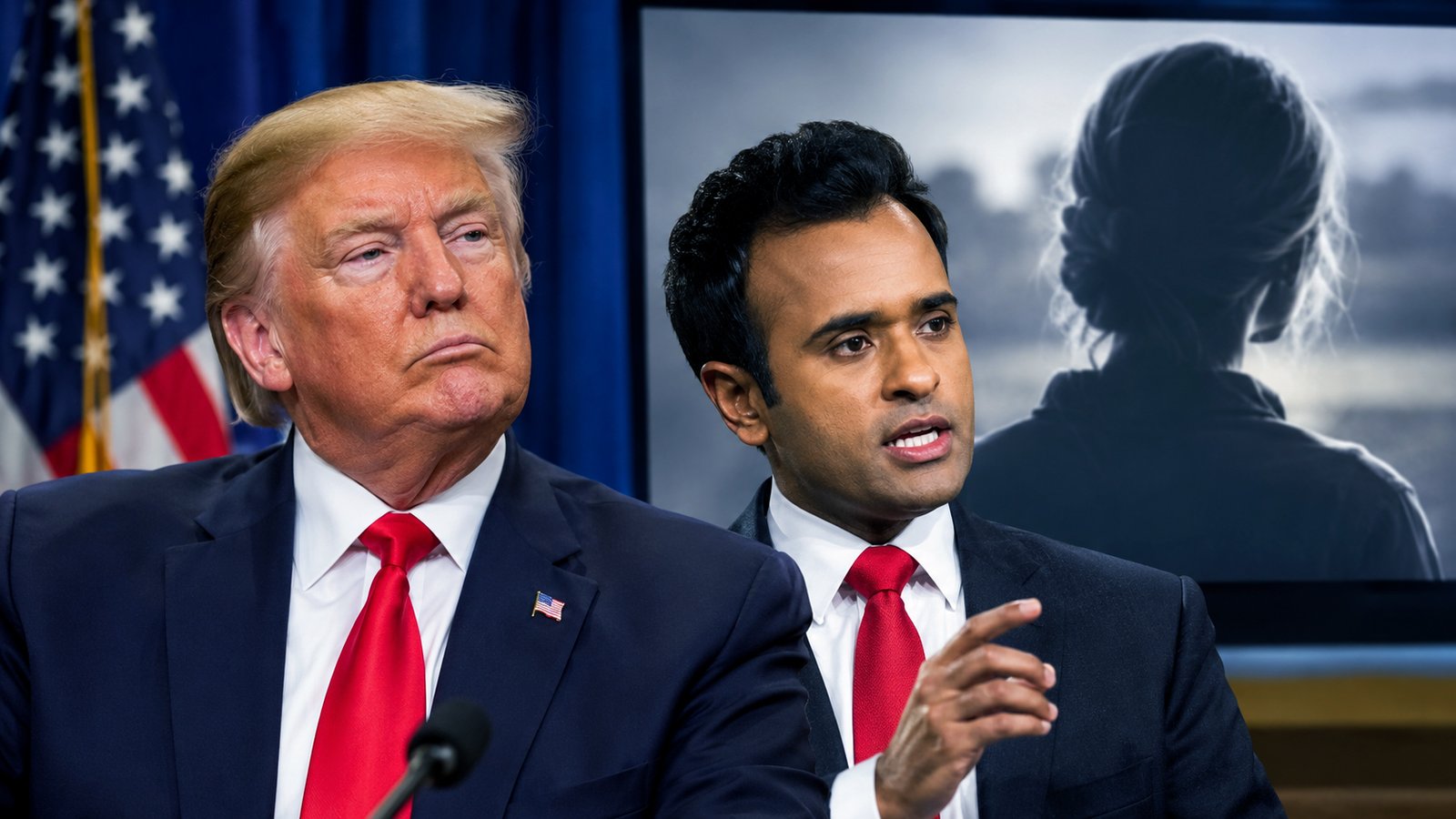
US President Donald Trump has thrown his support behind Republican gubernatorial candidate Vivek Ramaswamy following a fierce political controversy over a campaign advertisement featuring the estranged mother of his Democratic opponent, Amy Acton.
The advertisement has attracted widespread attention in the United States because it brings deeply personal family history and allegations of childhood sexual abuse into an increasingly heated election campaign.
Trump defended Ramaswamy on Thursday, October 22, 2026, arguing that the advertisement was effective and should remain in circulation despite mounting criticism from several prominent Republicans.
The president’s intervention has intensified an already divisive debate about political campaigning, the use of personal trauma in election advertisements, and the limits of negative campaigning.
Ramaswamy, the Republican candidate seeking to become Ohio’s next governor, faces Democratic nominee Amy Acton in a closely watched race. His campaign produced an advertisement featuring Acton’s estranged mother, Donna Arthur, who criticises her daughter and disputes parts of her account of her childhood.
The advertisement has provoked an unusually sharp division within Republican circles. While Trump and Vice President JD Vance have defended Ramaswamy’s approach, other prominent Republicans have described the advertisement as troubling and urged the campaign to reconsider its decision to broadcast it.
The dispute has now become more than a disagreement between two gubernatorial candidates. It has developed into a wider political argument over whether a campaign can legitimately use a candidate’s painful family history to influence voters.
According to reporting by the Associated Press and other US news organisations, Ramaswamy’s campaign intends to spend approximately $4 million promoting the advertisement across Ohio. AP News
What Trump Said About the Advertisement
Trump publicly defended Ramaswamy on his Truth Social platform, dismissing criticism of the advertisement and attacking those who have called for its removal.
The president argued that the advertisement was politically effective and suggested that the media’s reaction was part of a coordinated effort to undermine the Republican candidate.
Trump also criticised Ohio Republican Governor Mike DeWine, who had described the advertisement as deeply troubling and encouraged Ramaswamy to take it down.
Rather than joining those calling for the advertisement to be withdrawn, Trump urged the candidate to keep running it.
His response reflected his longstanding preference for aggressive political messaging and his willingness to defend allies who use confrontational campaign tactics.
Trump has repeatedly portrayed criticism from political opponents and sections of the media as evidence that his political allies are being unfairly targeted.
In this case, however, the controversy involves more than conventional disputes over campaign promises, taxation or government performance. The advertisement draws on a family relationship marked by serious allegations concerning Acton’s childhood.
That background has made the president’s defence particularly contentious.
Supporters of Ramaswamy argue that voters deserve to hear information they consider relevant when choosing a political leader. Critics counter that the advertisement exploits an intensely personal and painful history rather than focusing on the policies and qualifications that should determine an election.
Trump’s intervention has strengthened Ramaswamy’s position among some conservative supporters while increasing pressure on other Republicans to explain whether they believe the advertisement crosses an ethical line.
The dispute also highlights Trump’s continuing influence over Republican politics. His endorsement can provide candidates with valuable visibility and support, but his involvement can also turn a state-level controversy into a national political confrontation.
The central question is no longer simply whether the advertisement attracts attention. It is whether the attention helps voters evaluate the candidates or distracts from the issues they are seeking to resolve.
Source: Associated Press reporting on Trump’s defence of Ramaswamy. AP News
Who Is Vivek Ramaswamy?
Vivek Ramaswamy is an American entrepreneur and Republican politician who gained national prominence during his campaign for the Republican presidential nomination in 2024.
Before entering politics, he built a career in the biotechnology and investment industries. His political profile grew through his outspoken criticism of what he describes as excessive corporate influence, progressive political ideology and established institutions.
During his presidential campaign, Ramaswamy positioned himself as a younger, forceful conservative willing to challenge established political figures and conventional campaign practices.
Although he did not secure the Republican presidential nomination, the campaign helped establish him as a prominent figure in the party.
His political relationship with Trump has also attracted attention. Ramaswamy has frequently expressed support for Trump’s political agenda and has sought to appeal to voters who favour confrontational leadership and a more aggressive approach to conservative politics.
His campaign for Ohio governor has brought those political instincts into a state-level contest with significant implications for both parties.
The current controversy presents a challenge for Ramaswamy because it places his campaign strategy under scrutiny beyond the usual questions about taxation, economic growth, public safety and government efficiency.
His supporters may see the advertisement as an example of a candidate refusing to retreat under pressure. Critics may interpret the same decision as evidence that the campaign is willing to exploit private family pain for political advantage.
Those competing interpretations could shape how voters view his judgement and leadership.
The controversy also creates a difficult communication challenge. The more attention the advertisement receives, the harder it becomes for the campaign to keep public discussion focused exclusively on its preferred issues.
Whether that attention ultimately benefits Ramaswamy will depend on how voters respond and whether the controversy changes their assessment of his suitability for office.
Who Is Amy Acton?
Amy Acton is a physician and Democratic politician who previously served as director of the Ohio Department of Health.
She became widely known during the COVID-19 pandemic, when she served as a leading public health official in Ohio and participated in the state’s response to the public health emergency.
Her experience in public health has helped shape her political profile, with supporters presenting her as a candidate whose professional background and government experience could be valuable in public office.
Acton’s campaign for governor places her in direct competition with Ramaswamy, creating a contest that has attracted attention beyond Ohio.
The controversy surrounding the advertisement has brought her childhood into the centre of the campaign, despite the fact that her professional record and policy proposals would ordinarily be expected to feature prominently in a gubernatorial race.
Acton has publicly disputed the portrayal of her childhood in the advertisement and condemned the decision to use her estranged mother’s statements against her.
She has said that she experienced sexual abuse by her stepfather when she was a child and that her mother failed to protect her.
These are serious allegations involving a painful period in her life. They should be discussed with care and not treated as entertainment or as proof of a candidate’s political character.
Acton’s account has also received support from her brother, Philip Stearns, who has publicly challenged the claims made in the advertisement.
The competing accounts have made the issue particularly sensitive. While the advertisement presents the mother’s criticism of her daughter, Acton and her brother have offered a different account of the family’s history.
For voters, the controversy raises a difficult question: how much weight should be given to accusations made by a relative who has been estranged from a candidate for decades, particularly when the dispute involves allegations of childhood abuse?
That question cannot be answered simply by deciding which message is more emotionally powerful.
Voters can assess candidates’ public records and statements, but claims about private family events require careful consideration of the available evidence and context.
Background reporting: CBS News coverage of the Ohio governor’s race controversy. CBS News
What Does the Attack Advertisement Say?
The advertisement features Donna Arthur, Acton’s estranged mother, criticising her daughter’s account of her upbringing.
In the video, Arthur calls Acton a liar and disputes claims about her childhood, including her account of experiencing homelessness.
Arthur’s appearance gives the advertisement an unusually personal character. Rather than relying only on statements from political opponents or criticism of a candidate’s public record, the campaign uses the voice of someone who is closely related to Acton.
That choice is central to the controversy.
Political advertisements commonly feature former colleagues, political opponents, public records or interviews intended to challenge a candidate’s credibility. Using an estranged family member introduces another dimension because viewers may interpret the speaker as having personal knowledge that an ordinary political opponent would not possess.
However, family relationships can be complicated, and a relative’s accusations do not automatically establish that those accusations are accurate.
The advertisement’s critics argue that its presentation risks encouraging voters to judge Acton through the lens of a painful family dispute rather than examining her policies and qualifications.
They also argue that the advertisement does not provide the full context needed to understand the estrangement between Acton and her mother.
Acton has said she experienced sexual abuse by her stepfather during childhood. Her brother has supported her account and said the family was removed from their mother’s custody after the stepfather faced criminal charges connected to the allegations.
According to published reports, the stepfather was charged in 1978 but fled and later died without standing trial. Therefore, the criminal allegations should not be described as a conviction. People.com
This distinction matters in responsible journalism.
Reporting that someone was charged with a crime is not the same as reporting that a court found the person guilty. Similarly, reporting a candidate’s allegations and the response from family members does not mean a news organisation should present every disputed detail as independently established fact.
A campaign advertisement is also a form of political communication, not an independent judicial finding or a comprehensive account of a family’s history.
Readers should therefore consider the advertisement alongside credible reporting and statements from the people involved.
Why the Advertisement Has Sparked Such Strong Reactions
The strongest criticism of the advertisement centres on the use of Acton’s reported childhood trauma in a political contest.
Opponents argue that allegations of childhood sexual abuse are serious matters that should not be reduced to campaign material designed to damage a candidate’s reputation.
The concern is not simply that the advertisement is negative. Negative advertising has been a feature of American politics for decades.
The concern is that it uses a deeply personal family conflict, including allegations of abuse, to influence voters during an election.
Critics say this approach risks turning a painful personal experience into a political weapon.
The advertisement has also raised questions about whether the involvement of an estranged relative makes a political claim more credible or merely more emotionally compelling.
A family member may possess personal knowledge of a candidate’s past, but that relationship can also involve conflict, estrangement, competing memories and unresolved grievances.
Consequently, a relative’s statement should not automatically be accepted as the final word on a candidate’s childhood.
Another concern is the effect on public debate.
When campaign advertising focuses on personal trauma, attention can move away from issues that directly affect voters, including healthcare, education, employment, taxes, infrastructure and public safety.
Those subjects remain central to the responsibilities of a state governor.
Ohio voters ultimately need to decide which candidate is best prepared to lead the state. Whether an advertisement featuring a family member helps them make that decision is open to debate.
The controversy has also highlighted the difference between what may be politically effective and what may be ethically defensible.
A campaign can attract widespread attention without necessarily persuading undecided voters. It can also energise supporters while alienating others who believe its tactics are excessive.
The advertisement’s ultimate political impact will depend on how voters interpret its message, the broader campaign environment and the candidates’ ability to redirect attention towards their proposals for governing Ohio.
Republicans Are Divided Over the Campaign Strategy
One of the most striking aspects of the controversy is that criticism has emerged from within the Republican Party.
Ohio Governor Mike DeWine, a Republican who has endorsed Ramaswamy, described the advertisement as deeply troubling and encouraged the candidate to remove it.
DeWine’s response is significant because it shows that disagreement over the advertisement is not limited to Democrats or people who oppose Ramaswamy’s political agenda.
Other Republicans have also criticised the advertisement, arguing that the use of Acton’s family history crosses a line.
Former Republican presidential candidate Nikki Haley has criticised Ramaswamy, while Meghan McCain has also condemned the advertisement.
The criticism reflects a broader disagreement over the standards Republican candidates should observe when campaigning against political opponents.
Some conservatives argue that political campaigns are inherently confrontational and that candidates should not be expected to abandon an effective advertisement simply because it generates criticism.
Others believe that aggressive campaigning must still be subject to ethical limits, particularly when the material involves childhood abuse and family trauma.
These disagreements reveal competing ideas about political leadership.
One approach prioritises tactical effectiveness, arguing that candidates must use every legitimate opportunity to distinguish themselves from their opponents.
Another approach emphasises restraint, arguing that a campaign should avoid exploiting vulnerable people or private suffering, even when the resulting advertisement might attract attention.
The debate is especially significant because Ramaswamy is not only running against Acton. His campaign is also being evaluated by voters who may have different expectations about how a governor should behave.
A candidate’s campaign tactics can become part of the public’s assessment of their judgement, temperament and approach to leadership.
The advertisement may therefore have consequences beyond the immediate controversy, regardless of whether the campaign believes it is effective.
Related coverage: The Washington Post on the backlash to Ramaswamy’s advertisement. The Washington Post
JD Vance Defends Ramaswamy
Vice President JD Vance has also defended Ramaswamy amid criticism from fellow Republicans.
Vance argued that Republicans should concentrate on winning the election rather than publicly complaining about the advertisement.
His response reflects a familiar political argument: internal disagreements should not distract a party from its broader electoral objectives.
From this perspective, public criticism of a candidate’s campaign strategy can weaken party unity and provide opponents with additional opportunities to attack.
However, critics of that position argue that party unity should not prevent Republicans from questioning tactics they consider inappropriate.
The disagreement illustrates the tension between maintaining political solidarity and holding candidates accountable for their decisions.
Vance’s intervention also demonstrates how a state gubernatorial race can become entangled with national Republican politics.
With Trump and Vance both defending Ramaswamy, the controversy has become a test of how much support the candidate retains among influential figures in the party.
At the same time, criticism from other Republicans makes it difficult to portray the dispute as a simple contest between Democrats and Republicans.
Instead, the debate reflects a disagreement within the party about how far candidates should go when attacking political opponents.
That disagreement may continue to shape the campaign as Election Day approaches.
Could the Advertisement Backfire?
Although negative advertisements are designed to weaken opponents, they do not always produce the intended result.
In some cases, voters may accept the message and become less supportive of the targeted candidate. In other cases, they may sympathise with the person being criticised, particularly if they believe the campaign has gone too far.
This possibility is central to the debate over Ramaswamy’s advertisement.
The controversy has drawn national media attention, giving the campaign substantial publicity. However, publicity is not the same as electoral support.
Some voters may view the advertisement as evidence that Ramaswamy is willing to challenge his opponent aggressively.
Others may conclude that the campaign is relying on personal attacks instead of presenting a persuasive case about how he would govern Ohio.
Voters who are already strongly committed to a candidate may interpret the advertisement through their existing political beliefs. Those who remain undecided may pay closer attention to the campaign’s tone and the evidence presented.
The advertisement could also shift attention away from Ramaswamy’s policy proposals and towards questions about his judgement.
That risk becomes more significant when criticism comes from people within his own political party.
However, it would be premature to conclude that the advertisement has already damaged his electoral prospects. Establishing its actual effect would require reliable polling, voter research and election results.
The broader lesson is that controversial political advertising can create both opportunities and risks.
A campaign may succeed in attracting attention while losing the trust of some voters. It may energise its strongest supporters while making it harder to persuade people who are less politically committed.
Whether the strategy works for Ramaswamy remains an open question.
The Role of Social Media in the Controversy
Social media has helped bring the advertisement to a much wider audience.
Campaign videos can spread rapidly through online platforms, allowing candidates to communicate directly with voters without relying entirely on traditional television advertising or newspaper coverage.
That speed can benefit campaigns seeking to control their message and generate public attention.
It can also make controversial content difficult to contain.
Once an advertisement begins circulating online, clips may be shared without context, commentators may offer competing interpretations, and users may react before reading detailed reporting about the underlying events.
The result can be an intense public debate in which emotional reactions spread faster than careful explanations.
In Acton’s case, the advertisement has prompted discussion not only about the candidates but also about childhood abuse, family estrangement and the responsibilities of political campaigns.
Those are sensitive subjects that require accurate and considerate reporting.
Social media users should be cautious about treating campaign claims as established facts or sharing allegations without examining the available evidence.
Journalists also have a responsibility to distinguish between verified information, allegations, political statements and commentary.
For news organisations such as TrendPeels, that distinction is essential.
Reporting a controversy does not require endorsing either candidate. It requires explaining what happened, presenting the relevant responses, and making clear where claims remain disputed.
The goal should be to help readers understand the issue rather than simply reproduce the most provocative statements circulating online.
What This Means for the Ohio Governor’s Race
The controversy has added another layer of uncertainty to Ohio’s gubernatorial contest.
Ramaswamy and Acton are competing for an office with substantial influence over state government, including healthcare policy, education, economic development, infrastructure and public administration.
Voters must decide which candidate they believe can best address those responsibilities.
The advertisement may affect how some voters evaluate the candidates, but its long-term significance will depend on whether the controversy changes the broader conversation about the election.
If the campaign remains dominated by personal accusations, both candidates may find it more difficult to keep public attention focused on their plans for governing.
For Acton, the immediate challenge is to respond to the advertisement while maintaining attention on her campaign platform and professional record.
For Ramaswamy, the challenge is to explain why his campaign considers the advertisement appropriate and why voters should support him despite the criticism.
Trump’s endorsement may help Ramaswamy reinforce his support among voters who value the president’s judgement. It may also ensure that the controversy continues receiving national attention.
Nevertheless, no endorsement can determine how every voter will interpret the advertisement.
Ohio voters have different political priorities, personal experiences and expectations of public officials. Some will focus on party affiliation and policy. Others may give greater weight to a candidate’s conduct during the campaign.
The election will ultimately be decided by voters, not by the volume of online reactions or the number of prominent politicians defending either side.
The controversy could become a defining moment in the race, but its final electoral effect remains uncertain.
A Wider Debate About Ethics in Political Campaigning
Beyond the immediate contest, the dispute raises broader questions about political advertising in the United States.
How far should candidates go when attempting to defeat an opponent?
Should a campaign use a relative’s criticism of a candidate if that criticism concerns private family matters? How should voters evaluate statements made by people involved in long-running personal disputes?
And what responsibility do political parties have when a candidate’s tactics generate widespread criticism?
There are no simple answers to every question, particularly in a political system that strongly protects freedom of expression.
Candidates and campaigns generally have considerable freedom to criticise opponents. However, the existence of that freedom does not mean every campaign tactic will be viewed as fair, responsible or politically wise.
Political advertising serves a legitimate democratic purpose when it helps voters compare candidates, scrutinise records and understand competing policy proposals.
It becomes more problematic when emotionally charged personal material overwhelms substantive discussion or encourages voters to accept disputed claims without examining the evidence.
The controversy involving Ramaswamy and Acton illustrates the difficulty of separating political strategy from ethical judgement.
Supporters of the advertisement may argue that the public should hear the mother’s account and make its own decision. Critics may argue that the campaign has used a painful family history to achieve political objectives.
Both positions are part of the public debate, but readers should distinguish the existence of a political argument from the truth of every claim made within it.
The most responsible approach is to examine the available evidence, consider the responses from the people involved and avoid treating an emotionally powerful advertisement as a substitute for independent reporting.
Ultimately, democratic accountability depends on voters having access to information that is accurate, relevant and presented with sufficient context.
Conclusion: Trump’s Support Intensifies the Political Storm
Donald Trump’s decision to defend Vivek Ramaswamy over the controversial advertisement featuring Amy Acton’s estranged mother has intensified an already divisive debate in Ohio.
The president has urged Ramaswamy to continue running the advertisement, while several Republicans have raised concerns about the use of Acton’s family history and allegations of childhood abuse in a political campaign.
The disagreement reveals a significant divide over the boundaries of negative campaigning and the responsibilities candidates have when seeking public office.
For Ramaswamy, the controversy presents both an opportunity to reinforce support among voters who favour aggressive political tactics and a risk of alienating those who consider the advertisement inappropriate.
For Acton, it creates the challenge of responding to a deeply personal attack while continuing to make her case to Ohio voters.
For the Republican Party, the dispute highlights tensions between party unity and the willingness of individual members to criticise a candidate’s campaign strategy.
The advertisement’s ultimate impact on the election remains uncertain. Its reach and the reactions it has generated demonstrate its ability to dominate political discussion, but only further evidence can establish whether it changes voter preferences.
As the race continues, the central question for Ohio voters will remain which candidate is best equipped to lead the state.
That judgement should rest on credible information about the candidates’ records, policies, conduct and qualifications—not solely on the emotional force of a campaign advertisement.
TrendPeels will continue to follow developments in the Ohio governor’s race and the wider debate over political campaigning in the United States.
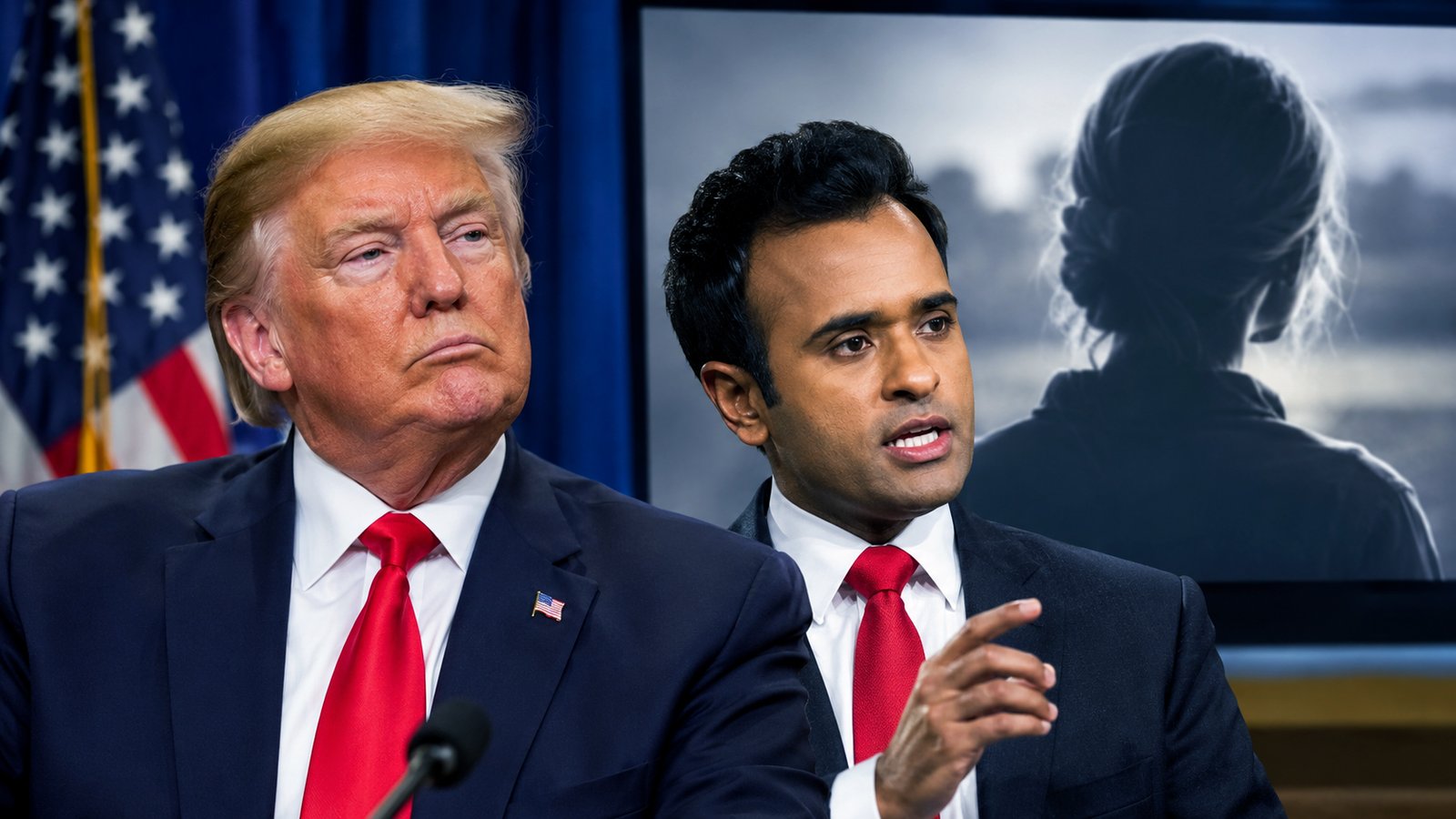
Publication note: This article is based on reporting available as of October 23, 2026. Before publishing, verify whether any new statements or campaign developments have emerged. Keep allegations clearly attributed and avoid describing criminal charges as convictions.
All set. Here’s a TrendPeels ready, including SEO details, a bio, and an image note to help keep things clear for TrendPeels. Here’s the article, ready for publication on TrendPeels. Headline Trump Backs Ramaswamy’s Attack Ad Against Amy Acton. By TrendPeels News Desk Publication: October 23rd, 2026, in International Politics | US Politics. Reading time about 10 to 12 minutes. Focus keyword: Trump backs Ramaswamy attack ad. Meta description: Donald Trump defends Vivek Ramaswamy over a controversial campaign ad featuring the rival’s mother. By TrendPeels News Desk, in International Politics | US Politics. Suggested image: an editorial illustration, not a real photo. Alt text: Editorial illustration of Donald Trump and Vivek Ramaswamy amid political controversy. Caption: An editorial illustration representing the political controversy surrounding Donald Trump’s defence of a controversial campaign advertisement. For publishing, add licensed editorial illustrations, and keep allegations clearly attributed, not stated as convictions. Before publishing, check for any updates, and keep the allegations clearly attributed, not stated as convictions.