
2027 Elections: Opposition Unity Faces Fresh Test | TrendPeels
 admin
By TrendPeels News Desk · October 21, 2026
Article
Nigeria’s political landscape is becoming increasingly active as preparations for the 2027 general elections gather momentum. One major question is now attracting attention: can opposition parties agree on a common presidential candidate, or will disagreements over leadership and party interests prevent them from presenting a united front?
Recent reports indicate that discussions about an opposition alliance are continuing, but differences among key political figures remain a major challenge.
Opposition coalition talks face a difficult test
Efforts to coordinate opposition parties have centred on the possibility of presenting a consensus candidate to challenge President Bola Ahmed Tinubu and the ruling All Progressives Congress (APC).
According to a report by Vanguard published on October 21, the G-100 opposition coalition has established legal and media committees as part of its efforts to advance discussions involving several political parties.
The report identified the African Democratic Congress (ADC), Nigeria Democratic Congress (NDC), Peoples Democratic Party (PDP), Social Democratic Party (SDP), Peoples Redemption Party (PRP) and Allied Peoples Movement (APM) among the parties participating in the discussions.
However, bringing political parties together is not simply a matter of agreeing that they want to challenge the ruling party. Leaders must also negotiate over candidates, party structures, political influence and the direction of a possible coalition.
These questions have made the search for a common platform increasingly complicated.
Kwankwaso rejects calls to withdraw his party’s ticket
A key point of disagreement involves Rabiu Musa Kwankwaso and the Nigeria Democratic Congress.
BusinessDay reported on October 21 that Kwankwaso had rejected the suggestion that the NDC’s presidential ticket should be withdrawn in favour of the ADC. The disagreement followed exchanges between political camps over the proposed opposition arrangement.
The dispute highlights a challenge that has confronted opposition alliances in Nigeria: political leaders may agree on the need for cooperation but disagree on who should lead it.
For supporters of individual candidates, the question of who receives a presidential ticket is often central to their expectations. Party leaders, meanwhile, must consider whether giving up a ticket could weaken their organisations or diminish their influence in future political negotiations.
As a result, negotiations over a single candidate can become as difficult as building the alliance itself.
What roles could Atiku Abubakar and Peter Obi play?
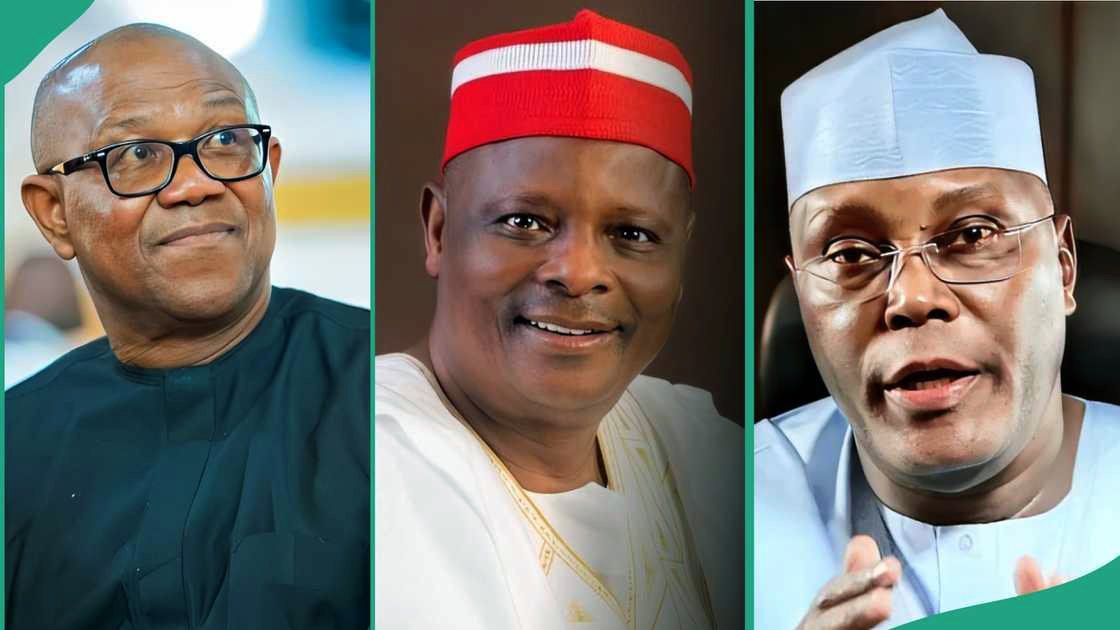
Former Vice President Atiku Abubakar and former Anambra State governor Peter Obi remain prominent figures in discussions about opposition coordination.
Their supporters represent different political constituencies and have distinct expectations about leadership, governance and the direction of the country.
Atiku’s political experience and established networks are part of the arguments made by his supporters. Obi’s supporters point to his appeal among voters seeking changes in the way Nigeria is governed. Kwankwaso also brings his own political organisation and support base into the discussion.
The challenge is finding an arrangement that can accommodate these interests without allowing disagreements to derail negotiations.
Vanguard’s report indicates that the G-100 coalition is continuing engagements involving several presidential hopefuls, including Atiku Abubakar, Peter Obi, Donald Duke and Adewale Adebayo.
Why opposition unity matters to Nigerian voters
For voters, the political negotiations are important because they can shape the choices available at the ballot box.
A coordinated opposition could make it easier for voters with similar priorities to rally around a common candidate. However, a coalition’s effectiveness would depend on more than the number of parties involved.
Voters may also consider the candidates’ policy proposals, records in public office, approaches to security, plans for economic recovery and strategies for addressing the cost of living.
Political alliances can also face difficulties after elections if participating parties have conflicting priorities or fail to agree on how power and responsibilities should be shared.
This means that voters have reasons to examine both the formation of a coalition and the policies its leaders intend to pursue.
Economic hardship and security remain important issues
The emerging political contest is taking place against the backdrop of concerns about living costs, employment, public services and insecurity.
President Tinubu’s administration has defended its economic reforms, including the removal of the petrol subsidy, while critics have raised concerns about the financial pressure experienced by households.
Reuters reported on October 21 that Finance Minister Taiwo Oyedele defended the government’s economic direction and its plan to rely more on private capital to support future growth. The report also noted that the reforms had contributed to higher living costs.
For opposition parties, these issues provide an opportunity to explain how their proposed policies would differ from those of the current administration.
But voters will need more than broad promises. They will want to know how proposed measures would be funded, how quickly they could be implemented and what protections would be available for vulnerable households.
The same scrutiny applies to the ruling party’s record and future commitments.
What happens next?
The coming months will be important for Nigeria’s political parties as they work through candidate selection, alliances and campaign preparations.
The immediate questions include whether opposition leaders can agree on a common candidate, whether individual parties will retain their separate tickets and whether coalition discussions will produce a shared policy programme.
For now, the reported disagreements show that opposition coordination remains an active and unresolved political issue
Ultimately, the significance of these negotiations will depend on what they deliver for voters. Nigerians will be watching not only to see which politicians work together, but also to assess the plans each political camp offers for addressing the country’s most pressing challenges.
TrendPeels will continue to follow developments in Nigeria’s political landscape as more verified information becomes available.