

TrendPeels | Politics
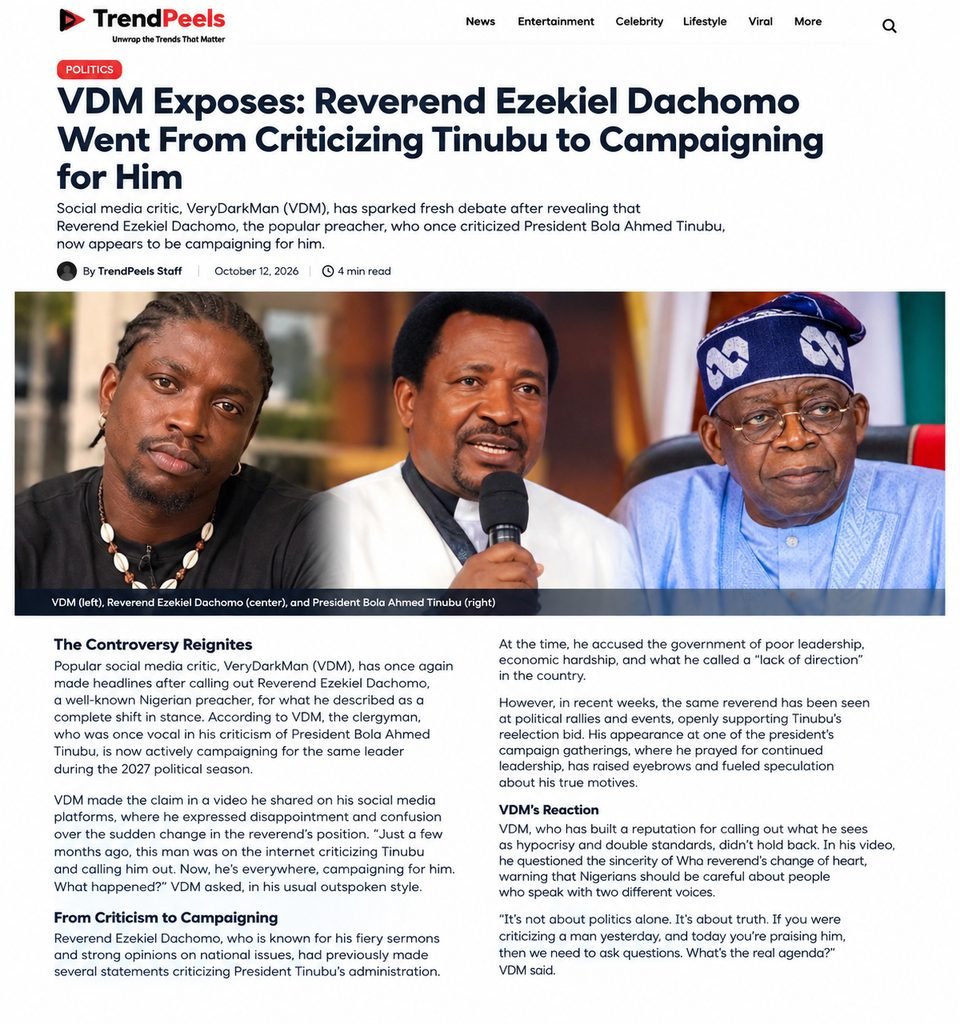
Social media critic VeryDarkMan, popularly known as VDM, has reportedly questioned Reverend Ezekiel Dachomo over an alleged change in his position on President Bola Ahmed Tinubu, sparking conversations about consistency, political support, and accountability in Nigeria.
The controversy raises a question many Nigerians often ask when public figures change their political positions: what happens when yesterday’s criticism becomes today’s support?
VDM’s Allegation Sparks Debate
VeryDarkMan has built a strong online presence through his outspoken commentary on public issues, celebrities, institutions, and political developments. His approach frequently attracts both support and criticism, particularly when he challenges people with significant public influence.
In this latest controversy, the social media personality reportedly questioned Reverend Ezekiel Dachomo over what he described as a shift from criticising President Tinubu to campaigning for him.
The allegation has the potential to generate debate because political endorsements from influential religious figures can carry considerable weight among their followers.
However, the circumstances surrounding the alleged change in position, including the reverend’s own explanation, should be established before drawing firm conclusions.
From Criticism to Political Support
Political opinions can change over time. Public figures may reconsider their positions because of new information, policy decisions, personal convictions, or changing political circumstances.
For that reason, a change in political support does not automatically prove hypocrisy or wrongdoing.
Nevertheless, when someone who previously criticised a leader later appears to support that same leader, the public may reasonably ask what has changed.
Did the individual become satisfied with the administration’s performance? Was there a particular policy or development that influenced the decision? Or is the change connected to broader political calculations?
These questions are best answered through direct statements and verifiable evidence rather than speculation.
Why Religious Leaders’ Political Positions Matter
In Nigeria, religious leaders often play influential roles beyond the pulpit. Their comments on governance, national security, the economy, and public leadership can shape discussions within their communities and across social media.
Some Nigerians believe religious leaders should openly hold politicians accountable, regardless of party affiliation. Others argue that religious leaders, like every other citizen, have the right to support candidates they believe can deliver positive change.
Both perspectives reflect a wider conversation about faith, leadership, and political participation.
The important issue is whether public figures explain their positions clearly and remain willing to answer questions about the decisions they make.
Nigerians Want Answers, Not Just Headlines
VDM’s reported criticism has brought attention to the importance of consistency in public life. For many people, the central issue is not simply whether Reverend Dachomo supports Tinubu, but whether the reasons behind the alleged change have been clearly communicated.
If the reverend has changed his position, an explanation from him would help the public understand his reasoning. Equally, any criticism directed at him should be assessed in the context of his actual statements and actions.
At the time of publication, TrendPeels has not independently established the full context of the alleged shift or confirmed the reverend’s response to VDM’s claims.
The Bigger Question: Can Politicians and Their Supporters Be Held Accountable?
Beyond the individuals involved, the controversy highlights a broader challenge in Nigerian politics: how citizens evaluate political endorsements and hold influential voices accountable.
Supporting a political leader is a personal choice. However, public support can invite public questions, especially when it appears to conflict with earlier statements.
Ultimately, Nigerians deserve political conversations grounded in evidence, transparency, and fair criticism.
Whether this dispute leads to further clarification or remains another heated social media debate, one thing is clear: political consistency continues to be a subject of public interest.
What do you think? Should public figures explain when they change their political positions, or should they be free to support whichever leader they choose? Share your opinion in the comments.
TrendPeels will update this report if verified statements or further information become available.